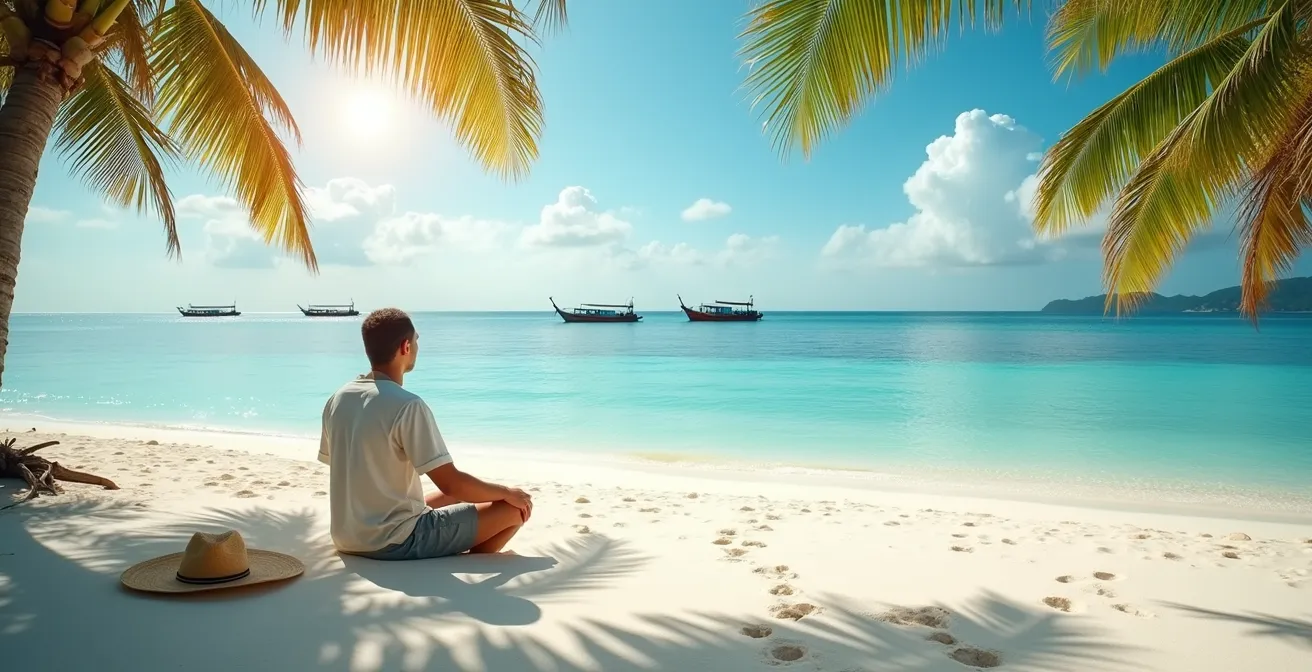
The iconic overwater bungalow experience in the Maldives is achievable for under $2,000—if you stop thinking like a tourist and start thinking like a hacker.
- Ditch expensive resorts for authentic local island guesthouses to cut accommodation and food costs by over 80%.
- Master the speedboat schedule and time your flight’s arrival to completely avoid the $500+ “transfer trap” of mandatory seaplanes.
Recommendation: The single smartest move is the “Resort Day-Hack”: stay affordably on a local island and buy a day pass to a luxury resort for a fraction of the nightly cost.
Picture the Maldives. An overwater bungalow, turquoise water stretching to the horizon, absolute paradise. Now, picture the bill. For most couples, this is where the dream evaporates. The perceived cost of this iconic destination places it in a realm of celebrity honeymoons and once-in-a-lifetime splurges, seemingly miles away from a realistic budget.
The common advice is predictable: travel during the monsoon season, fly budget airlines, and settle for a basic guesthouse far from the water. But does that really deliver the dream, or just a watered-down, compromised version of it? It often means missing out on the very essence of the Maldivian experience while still paying a premium. There’s a smarter way to approach this.
What if the real secret wasn’t just about saving money, but about strategically reallocating it? What if the “luxury” sold by many exclusive resorts is a beautiful, but fragile and overpriced, illusion? This guide reveals the budget luxury hacker’s approach: achieving that postcard-perfect experience by understanding the system and using its hidden backdoors. It’s about being savvy, not cheap.
By the end of this article, you will understand how to deconstruct the transfer trap, see through the environmental mirage of some resorts, and make intelligent choices between fixed villas and moving yachts. We will provide a clear roadmap to planning an unforgettable, Instagram-worthy trip to the Maldives for under $2,000 per person.
This guide breaks down the essential strategies that travel companies often obscure. Below, you will find a detailed table of contents that outlines the path to unlocking the Maldives without breaking the bank, transforming a distant dream into a tangible plan.
Contents: The Hacker’s Guide to a $2000 Maldives Trip
- Why Staying on a Local Island Changes Your Perspective of the Maldives?
- How to Master the Speedboat Schedule to Save $500 on Seaplanes?
- All-Inclusive or Pay-As-You-Go: Which Is Cheaper for Non-Drinkers?
- The Sinking Reality: What Resorts Don’t Tell You About Erosion
- When to Book to Get Sunshine Without Paying Peak Season Rates?
- The Transfer Trap: Why Getting There Can Cost More Than the Flight?
- Fixed Overwater Villa or Moving Yacht Hotel: Which Is Better for Views?
- How to Choose Between a Floating Resort and a Traditional Cruise Ship?
Why Staying on a Local Island Changes Your Perspective of the Maldives?
The default image of the Maldives is a private resort island, isolated and exclusive. The single biggest hack to shredding your budget is to reject this model entirely. Opting to stay on a “local island”—inhabited by Maldivian citizens—is not a compromise; it’s an upgrade in authenticity and a masterclass in savvy spending. On islands like Maafushi, Ukulhas, or Dhiffushi, you’ll find comfortable, well-managed guesthouses for $30-75 a night, a stark contrast to the $500+ starting price for a resort room.
This choice fundamentally changes your relationship with the country. Instead of being a temporary guest in a corporate bubble, you become a participant in the local economy. According to World Bank data, tourism represents a staggering 21% of the Maldives’ GDP, and by staying local, your money directly supports Maldivian families who own and operate guesthouses, cafes, and tour services. This creates a genuine cultural exchange that is impossible in a resort staffed largely by foreign workers.
The experience is richer and more memorable. As travel blogger Nomadic Matt documented, he spent less than $75 per day on local islands. This budget included a private guesthouse room, delicious local meals for under $10 (compared to $100+ at resorts), and activities. He highlighted that you can witness the 5 AM call to prayer, see the daily catch traded at bustling fish markets, and learn the stories of the families you’re staying with. It’s an immersive experience that requires respecting local customs, such as modest dress codes outside designated “bikini beaches,” but rewards you with a true understanding of this unique island nation.
Ultimately, staying on a local island reframes the Maldives from a simple luxury product to a living, breathing culture that you can experience affordably and responsibly.
How to Master the Speedboat Schedule to Save $500 on Seaplanes?
The second-biggest budget killer in the Maldives isn’t accommodation; it’s the transfer from Malé’s Velana International Airport (MLE) to your island. Resorts located far from the capital often make a seaplane transfer mandatory, a breathtaking 30-minute flight that comes with a non-negotiable price tag of $250-$500 per person, round-trip. For a couple, that’s up to $1,000 spent before even checking in. This is the essence of the “transfer trap.”
Mastering the public and shared transport system is the definitive hack to bypass this cost. The options are a spectrum of cost and convenience. Public ferries are incredibly cheap at $2-5 but are slow (3-5 hours) and don’t run on Fridays. The sweet spot for the budget luxury hacker is the shared speedboat. Costing between $25-75 per person for a 45-90 minute journey, these services run multiple times a day and offer a fast, efficient, and affordable alternative. Choosing a guesthouse on a local island within a speedboat’s range (like those in the South Malé or Ari Atolls) makes this strategy possible.
However, success hinges on one critical factor: timing your flight’s arrival. Most speedboat services stop running around 4:00 PM. Arriving after this time could force you into an expensive private transfer or an unwanted overnight stay in Malé. The key is to book an international flight that lands at MLE before 2:00 PM, giving you ample time to clear immigration, collect your bags, and meet your pre-booked speedboat.
Your Golden Arrival Window Checklist: Mastering Maldivian Transfers
- Book Smart: Target flights that arrive at Malé (MLE) before 2:00 PM to ensure you can catch a same-day speedboat transfer.
- Coordinate Early: Contact your guesthouse 1-2 weeks before your arrival. They are the best resource for booking a spot on a reliable shared speedboat.
- Join the Network: Ask your guesthouse about WhatsApp groups for shared transfers. You can often join groups of other travelers to split costs, especially for less common routes.
- Have a Plan B: If a late arrival is unavoidable, pre-book a guesthouse in Hulhumalé (a short taxi ride from the airport) for $30-45, rather than getting stuck with an expensive last-minute option.
- Prepare for Arrival: Download offline maps of the area and save the contact numbers for your guesthouse and speedboat operator before you take off.
By treating your arrival logistics with the same importance as your flight booking, you can eliminate the single most prohibitive cost associated with a Maldives trip, freeing up hundreds of dollars for experiences.
All-Inclusive or Pay-As-You-Go: Which Is Cheaper for Non-Drinkers?
The “all-inclusive” package is a tempting offer, promising a stress-free vacation with no surprise bills. In the Maldives, where resorts are isolated and a la carte dining can be exorbitant, it seems like a logical choice. However, for couples who are not heavy drinkers, it’s often a financial trap. The key to understanding this lies in one crucial fact: the Maldives is a Muslim country where alcohol is prohibited, except on licensed resort islands where it is heavily taxed and extremely expensive.
A significant portion of any all-inclusive premium is designed to cover the high cost of unlimited alcoholic beverages. If you don’t drink alcohol, you are effectively subsidizing the consumption of other guests. Let’s break down the math. A typical pay-as-you-go food bill at a mid-range resort might be $150-200 per person per day. An all-inclusive package might add a premium of $150-250 on top of the room rate. For a drinker, a few cocktails ($20-25 each) and glasses of wine ($15-20 each) quickly make this worthwhile. For a non-drinker, you’re paying a huge premium for soda and juice.
This calculation becomes even more lopsided when staying on a local island. There, alcohol is not available at all, so the concept of an all-inclusive package is moot. Dining at local cafes is incredibly affordable, with delicious meals costing between $5 and $15. A couple could eat very well for under $50 per day combined. Even if you factor in the “Resort Day-Hack”—buying a day pass to a luxury resort—many of these passes include lunch and non-alcoholic drinks, giving you the best of both worlds without the long-term commitment of an all-inclusive plan.
Therefore, for the savvy, non-drinking couple, the answer is clear: pay-as-you-go is almost always the cheaper and smarter option. It provides flexibility and ensures you only pay for what you actually consume, freeing up your budget for activities and experiences.
The Sinking Reality: What Resorts Don’t Tell You About Erosion
The postcard image of the Maldives is one of pristine, powder-soft white sand beaches. What many travelers don’t realize is that for many resort islands, this perfection is an expensive and ecologically damaging illusion. The Maldives is the world’s lowest-lying nation, making it extremely vulnerable to sea-level rise and natural erosion. Many resort islands are engaged in a constant, losing battle with the ocean, a reality they are not keen to advertise.
This manufactured beauty is what I call “Phantom Luxury.” Resorts spend fortunes on sand pumping, where sand is dredged from the lagoon floor and pumped back onto the beach, only to be washed away again by the currents. The visible signs of this struggle are everywhere if you know what to look for: unsightly sea walls, lines of concrete groynes jutting into the water, and large sandbags piled up to protect shorefront villas. As a World Bank report highlights, this substantial infrastructure development has intensified environmental vulnerabilities and disrupts the very marine ecosystems that draw tourists in the first place.
Choosing your accommodation with this “sinking reality” in mind is not just an ethical choice, but a practical one. Why pay a premium for a villa on a beach that is artificially maintained and shrinking? Many local islands, which have been inhabited for centuries, are situated in naturally more stable locations. Islands like Ukulhas are renowned for their natural coastlines and have embraced eco-conscious tourism as a core part of their identity. Choosing to stay there means you are supporting a more sustainable model. It also means your “beachfront” view is more likely to be of a natural, healthy reef ecosystem rather than a sea wall.
Here’s how to be an eco-conscious traveler in the Maldives:
- Seek natural stability: Look for guesthouses on local islands known for their wide, natural beaches and lack of artificial structures.
- Verify eco-credentials: Check if your accommodation has water conservation systems, effective waste management programs, and participates in local conservation.
- Support conservation efforts: Participate in coral planting workshops offered by local NGOs like Save the Beach Maldives.
- Choose shore-accessible reefs: Opt for islands with a healthy house reef you can snorkel from the shore, reducing the need for carbon-intensive boat trips.
In the end, the most authentic and beautiful Maldivian experience is often the one that works in harmony with nature, not against it. This savvy choice often turns out to be the most budget-friendly as well.
When to Book to Get Sunshine Without Paying Peak Season Rates?
Timing your trip to the Maldives is a delicate balance between weather, crowds, and cost. The peak season, from December to March, offers the driest weather and calmest seas, but it comes with exorbitant prices and packed beaches. The low season, from May to October, coincides with the monsoon, bringing a higher chance of rain and rougher seas, but also the lowest prices. The secret for the budget luxury hacker is to aim for the “shoulder seasons”: April and November.
These transitional months offer the best of both worlds. Specifically, the last two weeks of April are a golden window. It falls just after the Easter holiday rush, causing prices to drop, but it’s typically before the southwest monsoon fully sets in, meaning you still get plenty of sunshine and calm water. Similarly, November sees the tail end of the rainy season, with improving weather but prices that have not yet climbed to their peak-season highs. This is a classic supply-and-demand hack; you are targeting periods when demand drops but the “product” (good weather) is still high quality.
The impact on cost is dramatic. Data from travel industry reports shows how occupancy rates plummet between the high and shoulder seasons. For instance, according to 2024 tourism data, occupancy rates drop to 39.9% in June compared to 79.9% in February. By booking in April or November, you’re catching the beginning of this downward trend, giving you more bargaining power and access to better deals.
To maximize savings, booking components separately and in advance is key. Follow this timeline:
- Guesthouses (3-6 months out): Book your accommodation well in advance to secure the best rooms at early-bird rates, especially on popular local islands.
- Flights (2-3 months out): Monitor flight prices and book a couple of months before your travel date. Avoid booking too early or too late.
- Speedboats (1-2 weeks out): Arrange your speedboat transfers through your guesthouse a week or two before arrival. They can secure group rates.
- Fridays (Plan around): Remember that Fridays are the Muslim day of rest. Public ferries do not operate, and some services are limited, so plan your travel days accordingly.
By cleverly targeting these shoulder periods, you can enjoy a near-peak season experience at a fraction of the cost, leaving more of your $2000 budget for the experiences that matter.
The Transfer Trap: Why Getting There Can Cost More Than the Flight?
The single most underestimated cost in a Maldives vacation is the “last mile”—the journey from the international airport in Malé to your chosen island. This is the Transfer Trap, and falling into it can single-handedly derail a sub-$2000 budget. While you might find a return flight from Europe or Asia for $700, the mandatory transfer to a distant luxury resort can easily add another $500-$1000 per person.
The cost disparity between transport modes is staggering when analyzed on a per-kilometer basis. A public ferry is a marvel of affordability, while a resort-mandated seaplane is one of an island nation’s most expensive forms of transport. Understanding this breakdown is critical for any budget-conscious traveler.
| Transport Mode | Cost per KM (USD) | Example Route | Total Cost |
|---|---|---|---|
| Public Ferry | $0.10-0.20/km | Malé to Gulhi (30km) | $3-6 |
| Shared Speedboat | $1-2/km | Malé to Maafushi (27km) | $25-35 |
| Private Resort Speedboat | $8-12/km | Malé to Resort (30km) | $240-360 |
| Seaplane | $10-15/km | Malé to Ari Atoll (70km) | $700-1050 |
This table reveals the clear strategy: to stay within a speedboat’s range of Malé. However, what about the desire for that exclusive luxury resort experience? This is where the ultimate Maldives budget hack comes into play: the Resort Day-Hacking strategy. Instead of paying $800+ per night plus the exorbitant transfer, you stay on a nearby local island like Maafushi or Dhiffushi and purchase a day pass to a luxury resort.
The Day Pass Strategy: Luxury Experience Without the Overnight Cost
Travelers staying on local islands can purchase day passes to nearby 5-star resorts (like Anantara Veli or Adaaran Club Rannalhi) for $100-150 per person. As popularized by budget travel experts, these passes typically include the short return speedboat transfer, full access to the resort’s private beaches and pools, a buffet lunch, and sometimes even a credit for drinks. This strategy gives you 8 hours of pure luxury—lounging by the infinity pool, snorkeling on the house reef, and enjoying the pristine facilities—while completely avoiding the $500+ seaplane fee and the astronomical nightly accommodation cost. For a couple, this hack can provide a comparable luxury experience while saving over $1,300 for a single day.
By separating your accommodation (local guesthouse) from your luxury experience (resort day pass), you dismantle the resort’s expensive, bundled package and pay only for the parts you truly want.
Fixed Overwater Villa or Moving Yacht Hotel: Which Is Better for Views?
The overwater villa is the quintessential Maldivian dream. But what if the ultimate view isn’t a fixed one? For couples seeking varied scenery and a sense of adventure, a “liveaboard” or “yacht hotel” presents a compelling, and often more budget-friendly, alternative. This isn’t a massive cruise ship, but an intimate yacht that hosts 10-26 guests, cruising between pristine reefs, uninhabited islands, and sandbanks.
A fixed overwater villa, while stunning, offers one singular, unchanging perspective. You see the same patch of lagoon and the same sunset spot every day. A liveaboard, by contrast, is a moving hotel that offers a new, breathtaking view every single morning. One day you might wake up anchored in a turquoise lagoon next to a deserted sandbank; the next, you could be moored by a world-class channel dive site, ready to snorkel with manta rays right after breakfast.
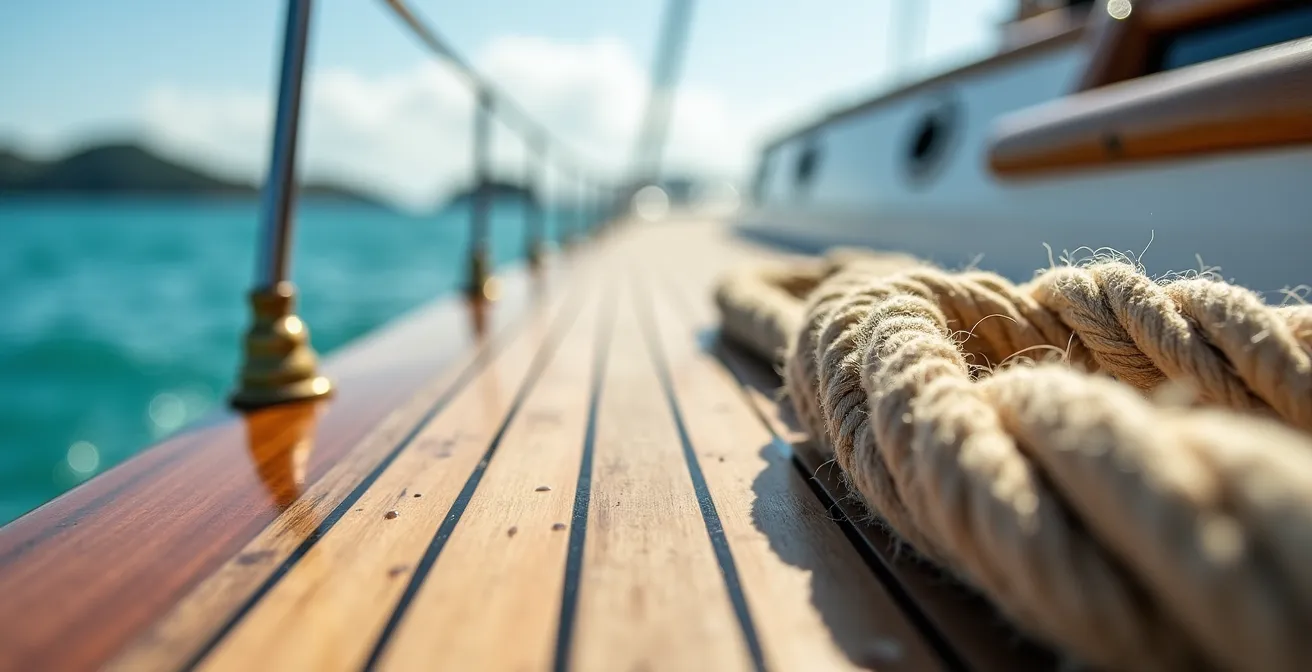
When you break down the value, the liveaboard model is incredibly efficient. A 7-day budget liveaboard can cost between $1,400-$1,800 per person. This price is typically all-inclusive, covering:
- Accommodation: A private cabin on the yacht.
- All Meals: Three full meals a day, plus snacks and non-alcoholic drinks.
- Activities: Multiple daily snorkeling or diving excursions at different sites, led by experienced guides.
- Transfers: All travel between islands is included.
Compare this to the cost of a fixed villa: $500+/night for the room, plus $200/day for food, plus $100+/day for activities. The daily cost at a resort can easily exceed $800, making the liveaboard a far superior value proposition for active travelers. The social experience is also a huge draw, offering a chance to connect with a small group of like-minded travelers from around the world.
For those whose idea of luxury is exploration and unique daily experiences, a liveaboard doesn’t just match the overwater villa—it surpasses it, providing unparalleled views and adventure for a fraction of the price.
Key Takeaways
- Staying on local islands provides an authentic cultural experience and massive savings over isolated resorts.
- Timing your flight to align with speedboat schedules is the single most effective way to save hundreds of dollars by avoiding the “transfer trap.”
- For budget-savvy and sustainable travel, choosing naturally stable islands and eco-conscious guesthouses is smarter than paying for artificially maintained resort beaches.
How to Choose Between a Floating Resort and a Traditional Cruise Ship?
When considering a “floating hotel” in the Maldives, it’s crucial to distinguish between a small-scale liveaboard yacht and a massive, traditional cruise ship. They offer vastly different experiences, costs, and environmental impacts. For the savvy traveler focused on an authentic and sustainable Maldivian adventure, the choice is clear: the small liveaboard is infinitely superior.
A large cruise ship, carrying 2,000+ passengers, is a floating city that offers a generic, mass-market experience. Its business model offers minimal benefit to the local Maldivian economy. Excursions are often overpriced and crowded, and the ship’s sheer scale can have a significant negative impact on the fragile coral reefs. In contrast, a small liveaboard (10-26 guests) is often locally owned and operated. Your money directly supports local crews, guides, and businesses. The experience is intimate and tailored, focused on exploring the best of the Maldives’ natural beauty.
This difference is also reflected in employment statistics. Data from the World Bank reveals that only 33% of resort employees are Maldivian, a figure likely even lower on international cruise lines. Local liveaboards, however, are a cornerstone of direct community employment. The table below starkly contrasts the two options:
| Factor | Small Liveaboard (10-26 guests) | Large Cruise Ship (2000+ guests) |
|---|---|---|
| Environmental Impact | Lower impact, supports marine conservation | High waste, potential reef damage |
| Local Economic Benefit | Direct support to local operators | Limited benefit to local communities |
| Social Experience | Intimate, like-minded travelers | Anonymous, mass-market |
| Marine Access | Multiple daily snorkel/dive stops | Limited water activities |
| Cost (7 days) | $1,400-2,000 all-inclusive | $2,000-5,000+ plus extras |
Ultimately, achieving the Maldivian dream on a budget is not about sacrifice. It’s about making smarter, more conscious choices. By embracing local islands, hacking the transfer system, and choosing authentic experiences like liveaboards over mass-market products, you unlock a richer, more memorable, and more sustainable paradise adventure—all while keeping your budget firmly intact.