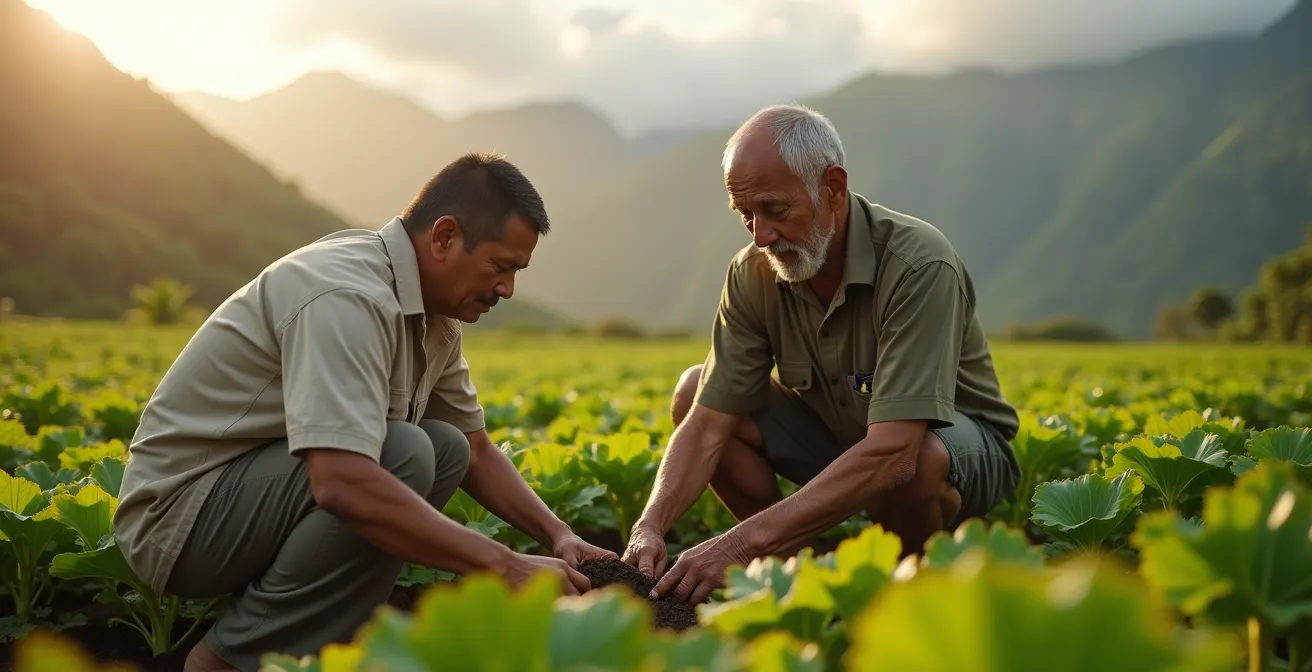
The key to visiting Hawaii without causing harm is to shift from a tourist’s mindset to one of kuleana—a deep sense of responsibility and privilege.
- Your actions, from where you spend your money to how you interact with the ocean, can either extract from or help regenerate local communities and ecosystems.
- Ethical choices involve actively supporting Native Hawaiian-owned businesses, opting for legal accommodations, and practicing “slow travel” by immersing yourself in one island.
Recommendation: Before booking anything, educate yourself on Hawaiian history and culture. This understanding is the foundation for a truly respectful and meaningful visit.
The images of Hawaiian paradise are alluring, but they are increasingly paired with headlines about overtourism and pleas from locals for tourists to “go home.” For the conscious traveler, this creates a difficult paradox: a deep desire to experience the beauty of the islands clashing with a profound sense of guilt. You wonder if your presence, no matter how well-intentioned, contributes to the very problems—housing crises, cultural erosion, and environmental strain—that plague this sacred place. The common advice to “be respectful” feels vague and insufficient when faced with such systemic issues. You want to do more than just minimize your negative impact; you want to know if it’s possible for your visit to be a positive force.
The truth is, it’s not about simply following a list of rules. The path to a respectful visit lies in embracing a core Hawaiian value: kuleana. This is not just a word; it’s a worldview that encompasses responsibility, privilege, and a reciprocal relationship with the land and its people. It means understanding that being a guest in Hawaii is a privilege that comes with a duty to care for it. This guide is built on that principle. Instead of a checklist of “don’ts,” it offers a framework for understanding the “why” behind each action. We will explore how to make choices that are regenerative, not extractive—choices that honor the culture, support economic sovereignty for Native Hawaiians (Kanaka Maoli), and preserve the natural wonders you’ve come to see. This is your invitation to travel not just as a visitor, but as an informed ally.
This article provides a comprehensive roadmap for traveling with kuleana. We will delve into the true meaning of “Aloha,” show you how to ensure your spending benefits local communities, and offer practical guidance on everything from ocean safety to ethical accommodations, empowering you to make a meaningful difference.
Summary: A Practical Guide to Traveling Hawaii with Kuleana and Respect
- Why “Aloha” Is More Than Just a Greeting for Locals?
- How to Ensure Your Money Goes to Kanaka Maoli Businesses?
- One Island or Four: Which Strategy Is Better for a 10-Day Trip?
- The Shorebreak Mistake That Sends Tourists to the ER Daily
- When to Visit Maui to See Whales From the Shore?
- Why Your Airbnb Rental Might Be Pushing Locals Out of the City?
- Surfing or SUP: Which Core Workout Suits Your Fitness Level?
- How to Avoid Contributing to Mass Tourism in Popular Destinations?
Why “Aloha” Is More Than Just a Greeting for Locals?
For many visitors, “Aloha” is the first and last word they learn, used casually as a hello or goodbye. But reducing it to a simple greeting misses its profound cultural and even legal significance. In Hawaiian culture, Aloha is a life force, an ethos of love, peace, and compassion that guides interactions. It’s about a mutual sense of respect and a connection between individuals. To give Aloha is to share your spirit; to receive it is to be welcomed with genuine warmth. It is this depth that makes its casual, thoughtless use feel hollow to many locals.
This concept is so fundamental that it’s embedded in state law. The “Aloha Spirit” law defines Aloha as the “coordination of mind and heart” and mandates that citizens and officials conduct themselves with this principle. Hawaii Revised Statutes §5-7.5 codifies these cultural values, making it the only U.S. state to legally frame ethical behavior around an indigenous concept. Understanding this transforms Aloha from a vocabulary word into a code of conduct. It’s a call to act with kindness, humility, and a genuine desire for connection, not just to recite a greeting.
Practicing true Aloha as a visitor means applying this principle to your actions. It’s about being a good guest, showing patience in traffic, and interacting with service workers with grace and gratitude. It’s a mindset that extends to every part of your trip, shaping how you treat both people and place. Here are concrete ways to embody the Aloha Spirit:
- Remove your shoes before entering someone’s home or a sacred space.
- Accept a lei graciously and wear it around your neck while in the giver’s presence.
- Never turn your back on the ocean—a practice rooted in both safety and respect for its spiritual power (mana).
- Use “Aloha” and “Mahalo” (thank you) thoughtfully, with genuine intention.
- Ask for permission before entering areas marked as kapu (forbidden) or that appear to be private property.
By moving beyond the surface, you transform a simple word into a meaningful practice that honors the culture you’ve come to experience.
How to Ensure Your Money Goes to Kanaka Maoli Businesses?
One of the most powerful ways to practice kuleana is by consciously directing your spending. The tourism economy in Hawaii has historically funneled profits to foreign corporations and non-local investors, often at the expense of the Native Hawaiian community. Making the choice to support Kānaka Maoli (Native Hawaiian) owned businesses is a direct act of economic solidarity. It helps build local wealth, preserves cultural practices, and contributes to a more equitable and sustainable economic future for the islands.
Supporting these businesses is not just a gesture; it’s a vital part of the state’s economic health. Economic analysis shows that Native Hawaiian businesses are less dependent on tourism and are crucial for Hawaii’s long-term resilience. When you buy from a Native Hawaiian artisan, eat at a family-owned restaurant, or take a tour with a Kānaka Maoli guide, your money is more likely to stay within the community, funding schools, supporting families, and preserving a way of life.
The challenge is often knowing how to find these businesses. Fortunately, several organizations have created resources to make it easier for conscious travelers. Instead of relying on generic travel sites, seek out these dedicated directories:
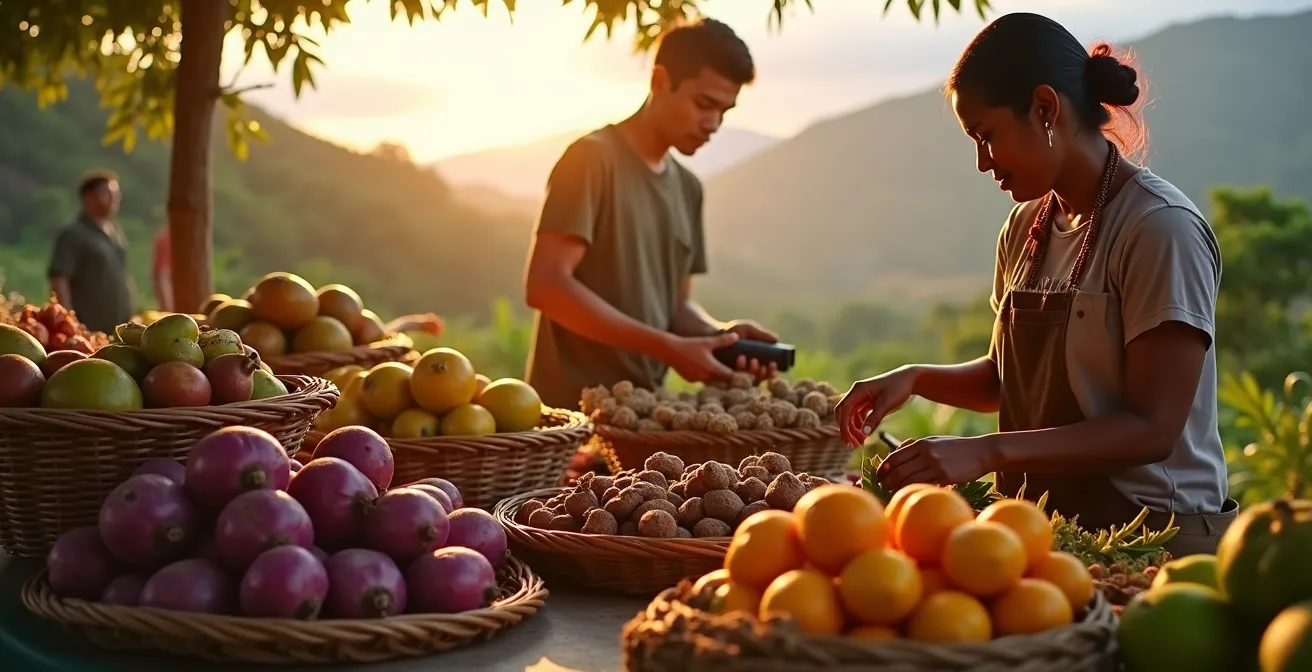
Look for opportunities to connect directly with makers and producers. Farmers’ markets are excellent places to find authentic, locally-grown food and crafts while engaging with the community. Here are some key resources to guide your spending:
- The Native Hawaiian Business Directory by the Council for Native Hawaiian Advancement (CNHA).
- The Office of Hawaiian Affairs’ (OHA) curated lists of Kānaka Maoli retailers and services.
- Pop-Up Mākeke and local farmers’ markets for direct-from-the-source products.
- Cultural institutions like Native Books/Nā Mea Hawaiʻi for authentic literature, art, and gifts that perpetuate the culture.
By making these intentional choices, you move from being a passive consumer to an active participant in Hawaii’s economic sovereignty.
One Island or Four: Which Strategy Is Better for a 10-Day Trip?
A common temptation for first-time visitors is to “see it all” by island-hopping across the archipelago. While the idea of experiencing the unique personalities of Oʻahu, Maui, Kauaʻi, and the Big Island in a single trip is appealing, this approach often represents an extractive form of tourism. It prioritizes a surface-level checklist over deep, meaningful connection. A more regenerative and respectful strategy, especially for a trip of 10 days, is to embrace “slow travel” by choosing one, or at most two, islands.
The fast-paced, multi-island itinerary comes at a significant cost—not just to your wallet, but to the environment and the local communities. The constant transit between airports, extra flights, and rental cars dramatically increases your carbon footprint. Furthermore, you lose entire days to the stress of travel, leaving you with a rushed, superficial experience of each place. This model encourages you to take from each island—a photo, a souvenir—without giving anything back in terms of genuine connection or concentrated economic support.
Choosing to stay on a single island allows for a completely different kind of journey. It gives you the time to understand the nuances of the place, discover hidden gems away from the crowds, and build relationships with the community. You can frequent the same local coffee shop, get to know the vendors at the farmers’ market, and truly immerse yourself in the rhythm of daily life. This approach not only enriches your own experience but also concentrates your economic contribution to a single community, making your impact more meaningful. A recent comparative analysis highlights the stark differences in impact:
| Factor | Single Island Stay | 4-Island Hopping |
|---|---|---|
| Inter-island Flight Costs | $0 | $600-1000 per person |
| Carbon Footprint | Minimal local transport | 6-8 additional flights |
| Time Lost to Travel | 0 days | 2-3 days in transit |
| Connection to Place | Deep cultural immersion | Surface-level tourism |
| Support for Local Economy | Concentrated in one community | Dispersed, minimal impact |
Slow Travel Success: The Hāʻena State Park Model
Hāʻena State Park on Kauaʻi provides a powerful example of successful visitor management. By implementing daily visitor caps, requiring reservations, and offering cultural education programs led by Native Hawaiian practitioners, the model has restored local access to sacred sites while fostering more meaningful visitor experiences. It proves that a slower, more intentional approach to tourism benefits both the land and the traveler.
Ultimately, a deeper connection to one place is far more valuable than a fleeting glimpse of many.
The Shorebreak Mistake That Sends Tourists to the ER Daily
The Hawaiian ocean is a source of immense beauty and joy, but it commands absolute respect. One of the most common and dangerous mistakes visitors make is underestimating the power of the shorebreak—waves that break directly on the sand. What may look like playful surf from a distance can be incredibly violent, capable of causing serious spinal cord injuries, broken bones, and concussions. For many tourists unfamiliar with its force, a moment of turning their back to the ocean can lead to a life-altering accident.
Emergency responders can attest to the danger; shorebreak injuries account for a majority of tourist emergency room visits in Hawaii. These are not surfing accidents happening far from shore; they occur in seemingly shallow water as people are entering or exiting. The force of the wave can slam a person into the hard-packed sand with enough power to cause catastrophic injury. Beaches like Hāpuna on the Big Island and Mākena (“Big Beach”) on Maui are famous for their beauty but are also notorious for their powerful shorebreak, especially during high surf.
Respecting the ocean (mālama ke kai) is a core tenet of living in Hawaii. This means never turning your back on the waves, a rule that is as much about spiritual respect as it is about physical safety. The ocean is considered a powerful life force, not just a swimming pool. Before entering the water, take at least 15-20 minutes to simply observe. Watch the wave patterns, see where other, more experienced people are swimming (or not swimming), and take note of any warning signs posted. If in doubt, do not go out.
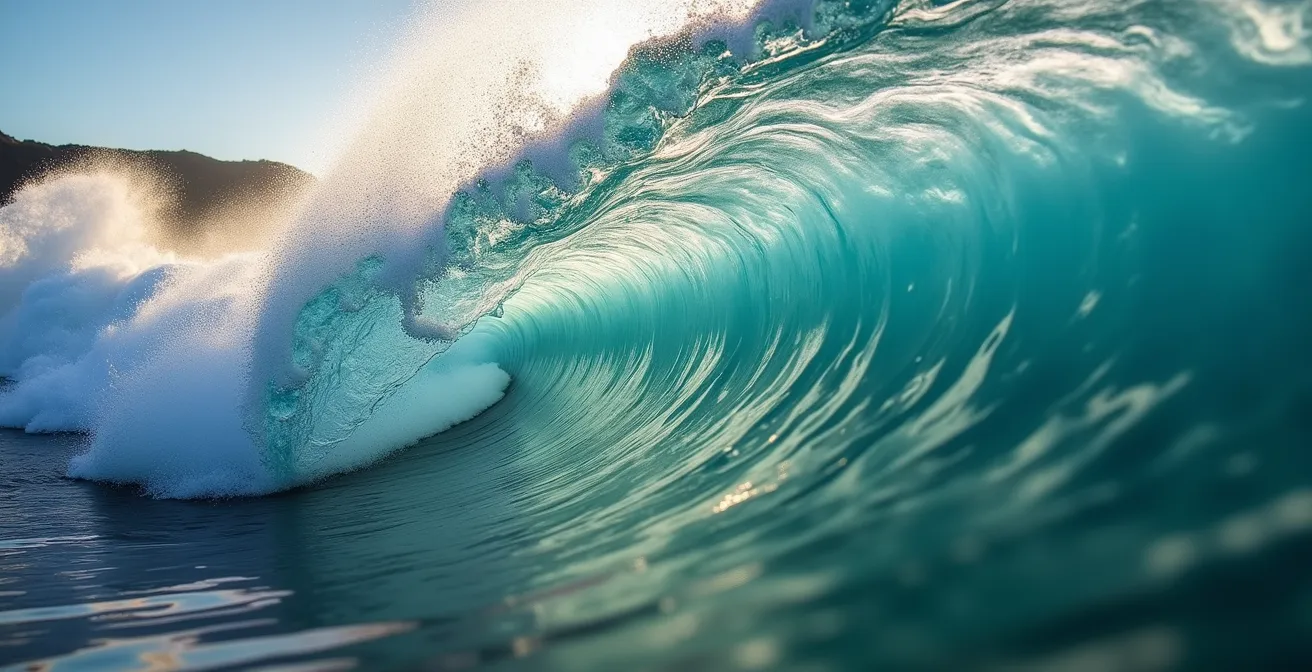
The visual power of the shorebreak is a clear warning of its force. Notice the steepness of the wave and the violent turbulence as it hits the sand. This is not gentle surf. Choosing a beach with a protective reef, like Poʻipū on Kauaʻi or the lagoons at Ko Olina on Oʻahu, is a much safer option for families and inexperienced ocean swimmers. Always swim at beaches with lifeguards and check with them about the current conditions before you even touch the water.
Your vacation should be memorable for the right reasons, and that begins with respecting the immense power of the Pacific.
When to Visit Maui to See Whales From the Shore?
Witnessing the majestic koholā, or humpback whales, is a highlight of any winter trip to Hawaii. Each year, thousands of these gentle giants journey to the warm, shallow waters of the islands to breed, give birth, and nurse their young. While many visitors opt for boat tours, one of the most respectful and awe-inspiring ways to see them is right from the shoreline, particularly on the island of Maui. This approach minimizes disturbance to the whales, especially mothers with calves, and offers a more serene and personal experience.
The peak whale watching season is well-defined. According to marine biologists, December through April marks peak whale season, with over 10,000 humpbacks migrating to the protected waters of the Hawaiian Islands Humpback Whale National Marine Sanctuary. February is often considered the absolute best month, with the highest concentration of whales in the channels between Maui, Molokaʻi, and Lānaʻi. During these months, you don’t need to be on a boat to see spectacular displays; breaches, tail slaps, and spouts are commonly visible from land.
For the best land-based viewing on Maui, find a comfortable spot along the south or west-facing coastlines. The key is to be patient and look for the “blow,” the misty spout of water a whale exhales, which can be seen from miles away. Early morning hours, from sunrise to around 10 a.m., are often ideal as the water is typically calmer and the sun’s glare is less intense. Bring a pair of binoculars to get a closer look, and simply sit, watch, and listen.
Land-Based Success: The Papawai Scenic Lookout
The Papawai Scenic Lookout on Maui, located on the Honoapiʻilani Highway between Māʻalaea and Lāhainā, is a prime example of successful land-based whale watching. This elevated viewpoint offers panoramic views of the ocean where whales are frequently active. Visitors during peak season report seeing multiple breaches and other surface behaviors without ever stepping on a boat, proving that you can have a deeply memorable encounter while giving the whales their space.
Choosing to watch from shore is an act of mālama (care) that respects the space these magnificent creatures need during a critical time in their life cycle.
Why Your Airbnb Rental Might Be Pushing Locals Out of the City?
Your choice of accommodation has a more direct impact on the local community than almost any other decision you’ll make. While a vacation rental in a residential neighborhood might seem like an “authentic” way to experience Hawaii, it is often a primary driver of the state’s severe housing crisis. The proliferation of illegal short-term rentals (STRs) removes housing units from the long-term market, driving up rents and making it impossible for local residents, including many Kānaka Maoli, to afford to live in their own communities.
The scale of the problem is staggering. In Maui alone, research shows that an estimated 27,000 short-term rental units have created an unsustainable housing market for residents. When a property can generate more income in a week as a vacation rental than it can in a month as a home for a local family, the economic incentive for landlords is overwhelming. This dynamic displaces lifelong residents, hollows out neighborhoods, and strains community resources, all while the profits often flow to off-island investors. This is a clear example of an extractive tourism model, where visitor convenience comes at the direct cost of community well-being.
The most responsible choice is to stay in legal, properly zoned accommodations. This includes hotels, resorts, and official bed & breakfasts that are located in areas designated for tourism. These businesses are part of the formal economy; they pay appropriate taxes that fund public services and are staffed by local employees. By choosing a legal rental, you are helping to keep residential neighborhoods for residents. Learning to distinguish between legal and illegal rentals is a critical skill for a responsible traveler.
| Legal Vacation Rentals | Illegal Rentals (Red Flags) |
|---|---|
| Located in resort-zoned areas | In residential neighborhoods |
| Display tax ID numbers (TA/GE) | No visible permits or tax numbers |
| Hotels and official B&Bs | Entire home rentals in local communities |
| Condo-tels in designated zones | Multiple listings by the same ‘host’ |
| Pay proper taxes to the state | Requests for cash or off-platform payments |
By opting for legal accommodations, you vote with your dollar for a system that protects residential communities and supports a more sustainable tourism industry.
Surfing or SUP: Which Core Workout Suits Your Fitness Level?
The warm waters of Hawaii invite visitors to get active, with surfing and stand-up paddleboarding (SUP) being two of the most popular choices. From a fitness perspective, both offer excellent core workouts. SUP, generally done in calmer waters, is a fantastic activity for balance and stability, engaging your core, back, and shoulders. Surfing is a more explosive, high-intensity workout, demanding power, agility, and a strong understanding of the ocean. However, choosing between them in Hawaii involves more than just assessing your fitness level; it requires a cultural understanding.
Surfing, or heʻe nalu, is not merely a sport in Hawaii; it is a deeply sacred cultural practice invented by ancient Hawaiians and woven into their history and spirituality. For Kānaka Maoli, the waves are a place of connection, and riding them is an art form. Approaching surfing as just another vacation activity without understanding its significance or the strict etiquette of the lineup can be a sign of profound disrespect. As cultural expert Keola Ryan of North Shore EcoTours emphasizes, this understanding is non-negotiable.
Surfing (he’e nalu) is a sacred cultural practice. Understanding surf etiquette – priority, not dropping in – is non-negotiable for respecting local surfers and ensuring safety.
– Keola Ryan, North Shore EcoTours
For visitors, especially beginners, the most respectful way to experience surfing is to take a lesson from a Native Hawaiian-owned surf school. These instructors not only teach you the mechanics of riding a wave but also share the cultural context, the history of heʻe nalu, and the essential rules of etiquette that ensure everyone’s safety and show respect for local surfers who have priority at their home breaks. For those not ready for that commitment, SUP in calm, designated areas offers a wonderful way to enjoy the ocean with a lower barrier to entry and less potential for cultural friction.
- Take lessons from Native Hawaiian-owned surf schools for an authentic cultural exchange.
- Choose SUP in calm waters as a less intrusive way to experience the ocean if you are a beginner.
- Ask locals or your instructor for appropriate beginner spots; never assume a famous break is open to all skill levels.
- Learn about the spiritual significance of surfing in Hawaiian culture before entering the water.
- Always respect the lineup hierarchy—locals have priority at their home breaks.
This thoughtful approach ensures your time in the water is a source of joy for you and is respectful to the host culture.
Key Takeaways
- True respect (kuleana) is an active responsibility, not a passive checklist. It involves education, intentional spending, and humility.
- “Slow travel,” focusing on one island, fosters deeper connection and has a lower environmental and social impact than island-hopping.
- Your choice of accommodation is critical. Opting for legal hotels and resorts over illegal vacation rentals directly helps combat the local housing crisis.
How to Avoid Contributing to Mass Tourism in Popular Destinations?
Avoiding the pitfalls of mass tourism in a place as popular as Hawaii requires a fundamental shift in mindset: from consumption to contribution. It means moving beyond being a simple tourist and becoming a practitioner of regenerative travel. This isn’t about avoiding popular spots altogether, but about engaging with them in a way that gives back to the land and the community. Your kuleana as a visitor is to leave Hawaii better than you found it, and there are tangible ways to do this.
One of the most impactful approaches is to participate in “voluntourism” opportunities that are vetted and supported by the local community. These are not superficial activities but genuine efforts to restore and preserve Hawaii’s unique culture and environment. Engaging in these activities provides a much deeper understanding of the islands and a profound sense of connection that you can’t get from a standard tour.
The Mālama Hawaiʻi Program: Voluntourism That Helps
The Mālama Hawaiʻi initiative is a prime example of regenerative tourism in action. The program connects visitors with meaningful opportunities like restoring traditional fishponds (loko iʻa), reforesting native habitats, or participating in beach cleanups. Studies have shown that visitors who participate in the Mālama program not only contribute directly to preservation efforts but also report much higher satisfaction with their trip, having formed a real bond with the place.
The most crucial step, however, happens before you even pack your bags. True respect begins with education. Understanding the history of Hawaii, including the illegal overthrow of the Hawaiian Kingdom in 1893, is essential context for your visit. It reframes your understanding of the islands from a simple American paradise to a sovereign nation under occupation, lending weight and urgency to the need for respectful behavior. This pre-trip education is your ultimate tool for avoiding the mindset of mass tourism.
Your Pre-Trip Kuleana (Responsibility) Checklist
- Educate on History: Watch the documentary ‘Act of War: The Overthrow of the Hawaiian Nation’ to understand the historical context of modern Hawaii.
- Donate to a Cause: Calculate 1% of your total trip cost and donate it to a verified Hawaiian nonprofit focused on cultural preservation or environmental restoration.
- Commit to a Pledge: Research and sign the Pono Pledge, which is a public commitment to be a mindful and respectful visitor, protecting the land and culture.
- Book Hawaiian-Owned: Prioritize booking tours, activities, and accommodations with businesses you have verified are Native Hawaiian-owned.
- Learn the Language: Go beyond ‘Aloha’ and ‘Mahalo.’ Learn the proper pronunciation and meaning of place names and other common words to show genuine interest.
By embracing this kuleana, you transform your vacation into a meaningful exchange, ensuring that your presence supports the vibrant future of Hawaii for generations to come.