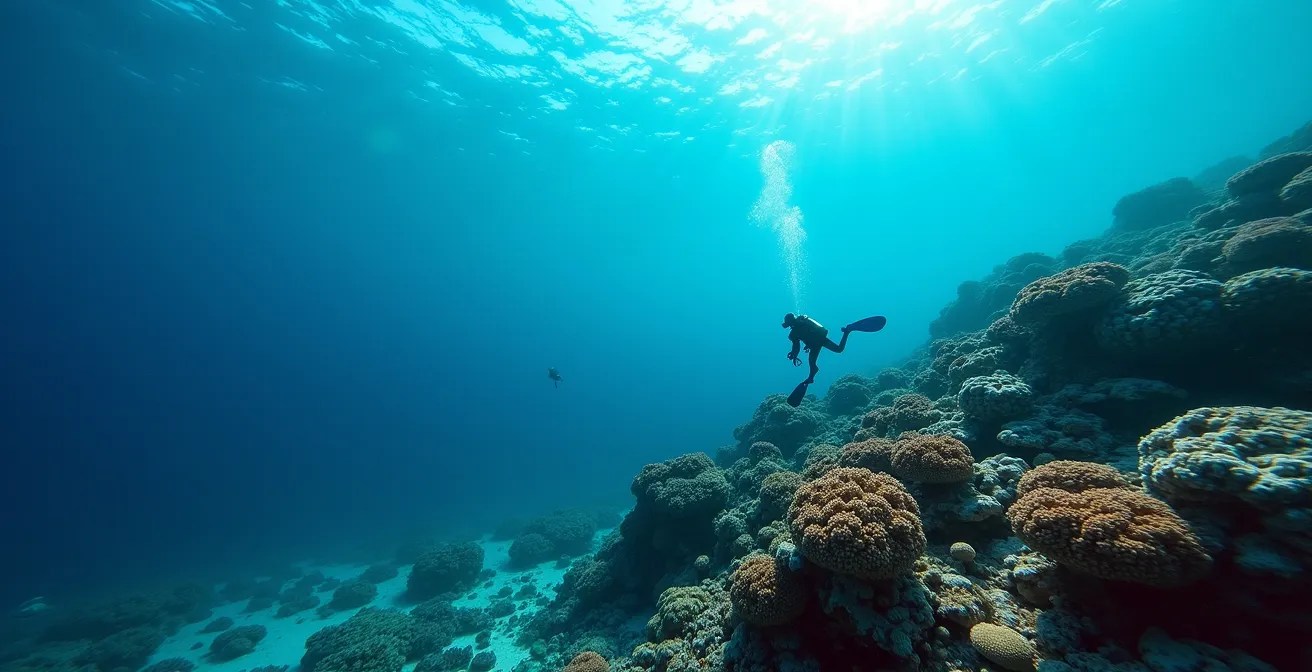
Contrary to popular belief, ‘reef-safe’ labels and basic ‘Leave No Trace’ rules are not enough. True low-impact travel requires understanding the hidden ecological cascades your presence can trigger, from the nanoparticles in your sunscreen to the invisible spores on your boots. This guide moves beyond platitudes to give you the scientific framework for making genuinely responsible decisions.
As an eco-tourist, your desire to explore the world’s most pristine environments—the Galapagos, the Antarctic peninsula, the deep rainforest—stems from a place of respect and admiration. You already know the basics: pack out what you pack in, stay on designated trails, and never disturb wildlife. The tourism industry often reinforces this simple checklist, suggesting that responsible travel is a matter of following a few golden rules. But what if these well-intentioned guidelines only scratch the surface of your true impact?
The most significant threats to fragile ecosystems are often invisible. They are not the plastic bottle left behind, but the chemical residues washing off your skin, the microscopic seeds clinging to your boots, and the subtle disruption of animal behavior caused by your mere presence. These are not malicious acts but the unintended consequences of being unprepared for the complex reality of these environments. The conventional wisdom about “eco-friendly” products and practices can be dangerously misleading, creating a false sense of security while ecological damage continues unseen.
This article abandons the superficial checklist. Instead, it provides a deeper, science-based understanding of the hidden ecological chain reactions your visit can initiate. We will dissect the science behind sunscreen toxicity, establish a proper biosecurity protocol for your gear, analyze the true environmental cost of a solo hike versus a guided one, and reveal how to see through the greenwashing that plagues the industry. The goal is not to discourage exploration but to empower you with the knowledge to make choices that genuinely protect the places you love.
To navigate this complex topic, this guide is structured to address the most critical and often overlooked aspects of responsible ecotourism. The following sections will provide detailed, evidence-based strategies for minimizing your footprint in a meaningful way.
Summary: A Scientific Guide to Visiting Fragile Ecosystems
- Why Your Sunscreen Might Be Killing the Ecosystem You Came to See?
- How to Decontaminate Your Hiking Gear to Protect Native Species?
- Certified Eco-Guide or Solo Hike: Which Is Safer for the Environment?
- The Feeding Mistake That Destroys Entire Local Food Chains
- When to Visit Sensitive Areas to Cause the Least Disturbance?
- The “Eco-Friendly” Label Scam That Fools 80% of Tourists
- Why Your “Reef-Safe” Sunscreen Might Still Be Toxic?
- How to Choose a True Wildlife Sanctuary vs. a Tourist Trap?
Why Your Sunscreen Might Be Killing the Ecosystem You Came to See?
Your choice of sunscreen is one of the most direct chemical impacts you have on aquatic ecosystems, particularly coral reefs. While you apply it with the good intention of protecting your skin, many common formulations contain chemical UV filters that are devastating to marine life. When you swim, these chemicals wash off and disperse into the water, where an estimated 14,000 tons of sunscreen are deposited in coral reef areas annually. This isn’t a trivial amount; it’s a persistent, low-level chemical assault.
The primary culprits are ingredients like oxybenzone and octinoxate. These chemicals are known endocrine disruptors that can induce coral bleaching even at incredibly low concentrations, damage the DNA of coral polyps, and cause deformities in larval stages of coral and other marine invertebrates. Essentially, the very product meant to protect you from one type of radiation (UV) can effectively poison the foundation of an entire ecosystem. Choosing a “reef-safe” product is a critical first step, but as we will see later, even that label requires careful scrutiny.
To avoid contributing to this chemical pollution, it is imperative to select a mineral-based sunscreen and apply it correctly. The active ingredients should be non-nano zinc oxide or titanium dioxide. Here are the key criteria to follow:
- Check for non-nano mineral formulas, where particles of zinc oxide or titanium dioxide are larger than 100 nanometers (nm).
- Actively avoid harmful chemical ingredients: oxybenzone, octinoxate, octocrylene, and avobenzone.
- Look for products labeled as fragrance-free and paraben-free, as these additives can also be environmental pollutants.
- Apply sunscreen at least 20-30 minutes before entering the water to allow it to bind to your skin and reduce the amount that washes off immediately.
- Whenever practical, prioritize UV-protective clothing like rash guards, hats, and long-sleeved shirts over sunscreen application. This is the only method with zero chemical impact.
Making a conscious choice to use physically blocking, non-nano sunscreens or covering up is a non-negotiable aspect of responsible marine ecotourism. It is a direct action that prevents the introduction of known toxins into a delicate environment.
How to Decontaminate Your Hiking Gear to Protect Native Species?
Beyond chemical residues, one of the greatest invisible threats travelers pose is biological. As an ecologist, I can attest that invasive species are a primary driver of biodiversity loss globally. Your hiking boots, trekking poles, and even the fabric of your backpack can act as vectors, carrying invasive seeds, fungal spores, or microscopic aquatic organisms from one ecosystem to another. This is not a theoretical risk; it is a well-documented ecological disaster that unfolds in slow motion. An entire forest can be reshaped by a single, hardy seed that hitched a ride on your shoelace.
To counter this, you must adopt a rigorous biosecurity protocol. This goes far beyond a quick rinse. It is a systematic process of decontamination designed to neutralize specific biological threats before you enter a new natural area, especially a protected one. Different threats require different methods, from heat treatment for aquatic invaders to chemical disinfection for fungal spores.

The success of such protocols is proven. For instance, New Zealand’s mandatory “Check, Clean, Dry” program has been remarkably effective. A study on the program’s impact showed it has reduced invasive species introduction by 82% in protected areas and prevented the spread of destructive algae to pristine rivers. This demonstrates that individual diligence, when practiced collectively, forms a powerful defense for native ecosystems. The following table outlines specific decontamination methods based on the type of biological threat.
| Threat Type | Cleaning Method | Required Time | Equipment Needed |
|---|---|---|---|
| Aquatic Invaders (algae, larvae) | Hot water soak (60°C/140°F) | 5 minutes | Large container, thermometer |
| Fungal Spores | 70% isopropyl alcohol spray | 10 minutes drying | Spray bottle, alcohol solution |
| Invasive Seeds | Brush + vacuum | 15 minutes | Stiff brush, portable vacuum |
| Bacterial Contamination | Bleach solution (1:10) | 30 minutes contact | Bleach, water, container |
Before every trip into a new park or trail system, especially when crossing international or regional borders, a full gear decontamination should be a mandatory part of your preparation. It is your ecological responsibility.
Certified Eco-Guide or Solo Hike: Which Is Safer for the Environment?
The decision between hiring a certified eco-guide and embarking on a solo expedition involves a crucial environmental trade-off. While the solitude of a solo hike is appealing, it often leads to a greater, more dispersed ecological impact. Unguided individuals are more likely to inadvertently step off-trail, create new “social trails” that cause soil erosion and habitat fragmentation, and misinterpret wildlife behavior, causing stress or disturbance. The impact of many individuals, each making small, uncoordinated mistakes, can be substantial.
A properly trained and certified eco-guide, conversely, practices the principle of impact concentration. They are trained to lead a group along the most resilient surfaces, effectively managing the group’s footprint. As Dr. Sarah Mitchell from the Journal of Sustainable Tourism Research notes, the guide acts as a “human trail,” which is often far less damaging than multiple, unpredictable impacts from unguided individuals. Their expertise also extends to enforcing safe wildlife viewing distances and providing real-time education about the ecosystem’s vulnerabilities.
However, not all “eco-guides” are created equal. The term is unregulated in many regions, making it essential for you to vet potential guides thoroughly. A true eco-guide is a steward of the environment first and a tour operator second. Their practices should reflect a deep commitment to conservation, not just guest entertainment. The following checklist provides critical questions to ask before booking.
Your Vetting Checklist: Questions for a Potential Eco-Guide
- What is your maximum group size per guide? (Smaller is almost always better).
- How do you manage human waste on multi-day treks? (They must have a clear pack-it-out policy).
- Can you provide specific examples of your contributions to local conservation projects? (Look for tangible support, not just words).
- What is your strict policy on wildlife encounters and minimum viewing distances?
- How do you actively educate your guests on Leave No Trace principles during the tour?
Ultimately, for most travelers in highly sensitive areas, opting for a small-group tour with a rigorously vetted, certified eco-guide is the more responsible choice. It centralizes impact, leverages expert knowledge, and contributes to a local economy that has a vested interest in conservation.
The Feeding Mistake That Destroys Entire Local Food Chains
The impulse to feed a wild animal is often born from a desire to connect, but it is one of the most destructive actions a tourist can take. Providing human food to wildlife initiates a devastating ecological cascade, a chain reaction that can unravel an entire food web. Animals that become habituated to human food sources lose their natural foraging skills, become aggressive, and often suffer from malnutrition due to diets they are not adapted to. This is the first, most visible link in the chain.
The secondary effects are even more profound. Artificially high food availability can cause a local animal population to explode, far beyond the ecosystem’s natural carrying capacity. A stark illustration of this occurred in Yellowstone National Park. A case study showed that tourist feeding of deer led to a population boom. This resulted in the overgrazing of willows, which in turn eliminated nesting sites for songbirds, reduced beaver dam construction by 60%, and fundamentally altered stream patterns. A single, seemingly benign act—offering food to a deer—triggered a landscape-level transformation.

This principle applies universally, from feeding monkeys in a temple ruin to tossing bread to seagulls on the coast. It alters natural behaviors, creates dependency, and can spread disease. The only responsible interaction is passive observation from a respectful distance. This means securing your food and waste properly, never leaving food unattended, and actively resisting the urge to offer a handout, no matter how “harmless” it seems. The health of the entire ecosystem depends on wildlife remaining wild.
Your responsibility is not to sustain the animals, but to avoid disrupting the natural systems that have sustained them for millennia. Observe, appreciate, and leave them to their own devices.
When to Visit Sensitive Areas to Cause the Least Disturbance?
Responsible ecotourism is not just about how you behave, but also when you are present. Ecosystems operate on a biological calendar, with critical periods for breeding, nesting, flowering, and migration. Your presence during these sensitive times can cause significant phenological disruption, even if you are following all other rules. Loud noises from a hiking group can cause nesting birds to abandon their eggs, the wake from a boat can disrupt fish spawning, and even the shadow of a drone can be perceived as a predator by ground-dwelling mammals.
Minimizing your impact requires timing your visit to avoid these high-sensitivity windows. This research should be a fundamental part of your trip planning. Before booking flights or tours, investigate the specific life cycles of the key species and ecological processes in your destination. For example, visiting alpine meadows during their short flowering season can lead to trampling that prevents reproduction for the entire year, while visiting coastal areas during turtle nesting season requires avoiding beaches at night.
This information is often available from local park services, conservation authorities, or university research departments. Choosing to visit during the “shoulder season” is often a good strategy, as it typically avoids both peak tourist crowds and critical biological periods. The following table provides a general overview of sensitive periods in different types of ecosystems, but you must always seek out specific data for your exact destination.
| Ecosystem | High Sensitivity Period | Best Visit Time | Critical Activities to Avoid |
|---|---|---|---|
| Coral Reefs | June-August (spawning) | September-November | Night diving, anchoring |
| Alpine Meadows | April-June (flowering) | Late July-September | Off-trail hiking |
| Wetlands | March-May (amphibian breeding) | August-October | Night visits with lights |
| Arctic Tundra | May-July (nesting) | August-September | Drone usage, loud noises |
By aligning your travel schedule with the natural rhythms of an ecosystem, you demonstrate a deeper level of respect and fundamentally reduce your disturbance footprint. It is a proactive, rather than reactive, approach to conservation.
The “Eco-Friendly” Label Scam That Fools 80% of Tourists
In the world of tourism, words like “eco,” “green,” and “sustainable” have become powerful marketing tools. Unfortunately, they are often used without substance in a practice known as greenwashing. This is the act of making misleading claims about the environmental benefits of a product, service, or company to appeal to conscientious consumers. Many operators know that tourists want to make responsible choices, and they exploit this desire with vague or outright false advertising.
The problem is rampant. Industry analysis reveals that a staggering 73% of self-proclaimed “eco-tourism” claims lack any credible third-party verification. This means the majority of hotels advertising “green practices” or tours calling themselves “eco-friendly” are doing so without accountability. They may highlight a trivial positive action, like offering to reuse towels (which also saves them money), while ignoring major negative impacts like unsustainable water use or poor waste management.
As a responsible traveler, your task is to become a discerning critic of these claims. You must learn to look past the marketing language and seek out tangible proof of a genuine commitment to sustainability. This involves asking critical questions and knowing the red flags of greenwashing. A truly sustainable operator will be transparent, data-driven, and often certified by a reputable, independent body.
Here are key red flags to watch for when evaluating a tour operator, hotel, or product:
- Vague Claims vs. Specific Certifications: Look for recognized certifications like B Corp, Green Key, or Rainforest Alliance, not just generic phrases like “eco-friendly.”
- Lack of Data: A genuine eco-lodge should have a publicly available impact report with measurable data on energy use, water consumption, and waste reduction.
- The “Hidden Trade-Off”: Be wary of a company that loudly promotes one small green feature (e.g., using recycled paper) while its core business remains environmentally destructive.
- Irrelevant Claims: Spotlighting a practice that is legally required (e.g., “we properly dispose of hazardous materials”) as if it were a special eco-initiative.
- Significant Omissions: Pay attention to what is not mentioned. If a seaside resort talks about everything but its wastewater treatment or impact on local fisheries, that is a major red flag.
Your power as a consumer lies in your ability to see through the deception. By rewarding genuine, transparent operators with your business, you help create a market where true sustainability is valued over superficial marketing.
Why Your “Reef-Safe” Sunscreen Might Still Be Toxic?
You have diligently avoided sunscreens with oxybenzone and chosen a product labeled “reef-safe.” You have taken a crucial step, but the due diligence cannot end there. The term “reef-safe” is not legally regulated, and many products bearing this label still contain ingredients that are harmful to marine life. The most significant hidden threat comes from nanoparticles in mineral sunscreens.
Mineral sunscreens use zinc oxide or titanium dioxide as a physical barrier. To make the application smoother and less white, manufacturers often shrink these particles to a nano-size (less than 100 nanometers). While this improves the cosmetic feel, it creates an ecological problem. As marine biologist Dr. Craig Downs of the Haereticus Environmental Laboratory explains, “Even mineral sunscreens marketed as reef-safe can harm marine life if they contain nanoparticles smaller than 100 nanometers, which can be ingested by coral polyps and other filter feeders, causing cellular damage.” These tiny particles can cross cellular membranes in a way that larger, non-nano particles cannot.
Case Study: The Limitations of Hawaii’s Sunscreen Ban
Following Hawaii’s landmark 2021 ban on sunscreens containing oxybenzone and octinoxate, studies observed a significant positive impact, with coral recovery rates in some protected bays increasing by 23% within 18 months. However, a follow-up analysis found that 40% of the “reef-safe” alternatives sold to tourists still contained either harmful nanoparticles or other unlisted chemical preservatives, highlighting the critical need for consumers to look beyond the front label and scrutinize the full ingredient list.
This means your responsibility extends to checking the ingredient list for the term “non-nano.” If the product does not explicitly state that it uses non-nano zinc oxide or titanium dioxide, you must assume the particles are nano-sized and potentially harmful. The following table compares the impacts of different sunscreen components.
An ingredient safety comparison published by the National Center for Biotechnology Information provides a clear breakdown of these risks.
| Ingredient Type | Environmental Impact | Safe Alternative | Effectiveness |
|---|---|---|---|
| Chemical UV Filters | High – causes coral bleaching | Non-nano minerals | Equal protection |
| Nano Particles | Medium – ingested by marine life | Non-nano (>100nm) | Slightly less smooth application |
| Preservatives (parabens) | High – endocrine disruption | Natural preservatives | Shorter shelf life |
| Silicones | Medium – bioaccumulation | Plant-based emollients | Different texture |
True reef safety requires this extra level of scrutiny. Always opt for non-nano mineral sunscreens from transparent brands, and remember that the most genuinely “reef-safe” option is always to cover your skin with UV-protective clothing.
Key takeaways
- Go Beyond the Label: “Reef-safe” and “eco-friendly” are unregulated marketing terms. Your responsibility is to scrutinize ingredient lists (non-nano minerals) and demand transparent impact data from operators.
- Adopt a Biosecurity Mindset: Your gear is a potential vector for invasive species. A systematic “Check, Clean, Dry” protocol is not optional; it’s a critical part of protecting biodiversity.
- Understand Ecological Cascades: Seemingly small actions like feeding an animal or being present during nesting season can trigger devastating, ecosystem-wide chain reactions. Your goal is to minimize all forms of disruption.
How to Choose a True Wildlife Sanctuary vs. a Tourist Trap?
Visiting a wildlife sanctuary can be a profound way to connect with nature and support conservation. However, many facilities that call themselves “sanctuaries” are, in reality, poorly disguised tourist traps that exploit animals for profit. A true sanctuary prioritizes the lifelong welfare of its animal residents above all else. A tourist trap prioritizes visitor entertainment and revenue, often at the animals’ expense. Distinguishing between the two is crucial for any ethical traveler.
The single most important indicator is the facility’s policy on human-animal interaction. A legitimate sanctuary will enforce a strict “no-contact” rule. This means no touching, riding, bathing, or posing for selfies with the animals. Such interactions are incredibly stressful for wild animals, hinder any potential for future release, and often involve cruel training methods behind the scenes. Observation from a respectful distance should be the only form of interaction offered.
Case Study: The Reality of Thailand’s “Elephant Sanctuaries”
Thailand is famous for its elephant attractions, but many hide a dark reality. One investigation of popular facilities marketed as “sanctuaries” found that the vast majority were commercial enterprises offering rides and bathing experiences. In stark contrast, true sanctuaries like Elephant Nature Park have a strict no-contact, observation-only model. They provide detailed rescue documentation for each elephant and focus on providing a naturalistic environment. This case highlights how facilities with nearly identical marketing can have fundamentally different ethical standards, proving the need for visitor vigilance.
A true sanctuary also functions with full transparency. They should be able to provide detailed histories for each animal—where it was rescued from and why it cannot be released. They should also have clear information about their funding, accreditation, and any rehabilitation and release programs. To ensure you are supporting a genuine refuge, use this verification checklist:
- Apply the ‘No Contact Rule’: Immediately reject any facility that allows guests to touch, ride, or have direct photo ops with animals.
- Ask for Rescue Stories: A true sanctuary will have documented histories for each individual animal in its care.
- Inquire About Release Programs: The ultimate goal for many legitimate sanctuaries is rehabilitation and release, when safe and possible.
- Check Social Media for Red Flags: Look for photos posted by the facility or visitors showing direct human-animal interaction.
- Verify Financial Transparency: Legitimate non-profits will often publish reports on how their funds are allocated.
- Research Accreditation: Look for approval from reputable bodies like the Global Federation of Animal Sanctuaries (GFAS).
By applying this rigorous vetting process, you ensure your tourist dollars support genuine conservation efforts and the ethical treatment of animals, rather than perpetuating a cycle of exploitation disguised as ecotourism.
Frequently Asked Questions on Visiting Fragile Ecosystems
How can I find specific biological calendar information for my destination?
The most reliable method is to contact local conservation organizations, national park services, or regional research stations directly. These groups often maintain detailed phenological data and can provide the most current information on sensitive periods for breeding, nesting, or flowering based on real-time conditions, which can vary from year to year.
Does time of day really matter for ecosystem impact?
Yes, absolutely. Dawn and dusk are crepuscular periods, which are critical feeding, hunting, and communication times for a vast number of species. Human presence during these hours can cause significant disruption. Planning your activities for the middle of the day, typically between 10 a.m. and 3 p.m., generally causes less disturbance to natural wildlife behavioral patterns.
What if peak tourist season coincides with sensitive biological periods?
This common conflict requires a conscious trade-off. The most responsible options are to: 1) choose an alternative nearby destination that is not in a sensitive period, 2) opt for observation from designated, distant viewpoints rather than immersive experiences like trail hiking or boating, or 3) if the disruption risk is severe, consider virtual tours or postponing your visit to a more appropriate time.