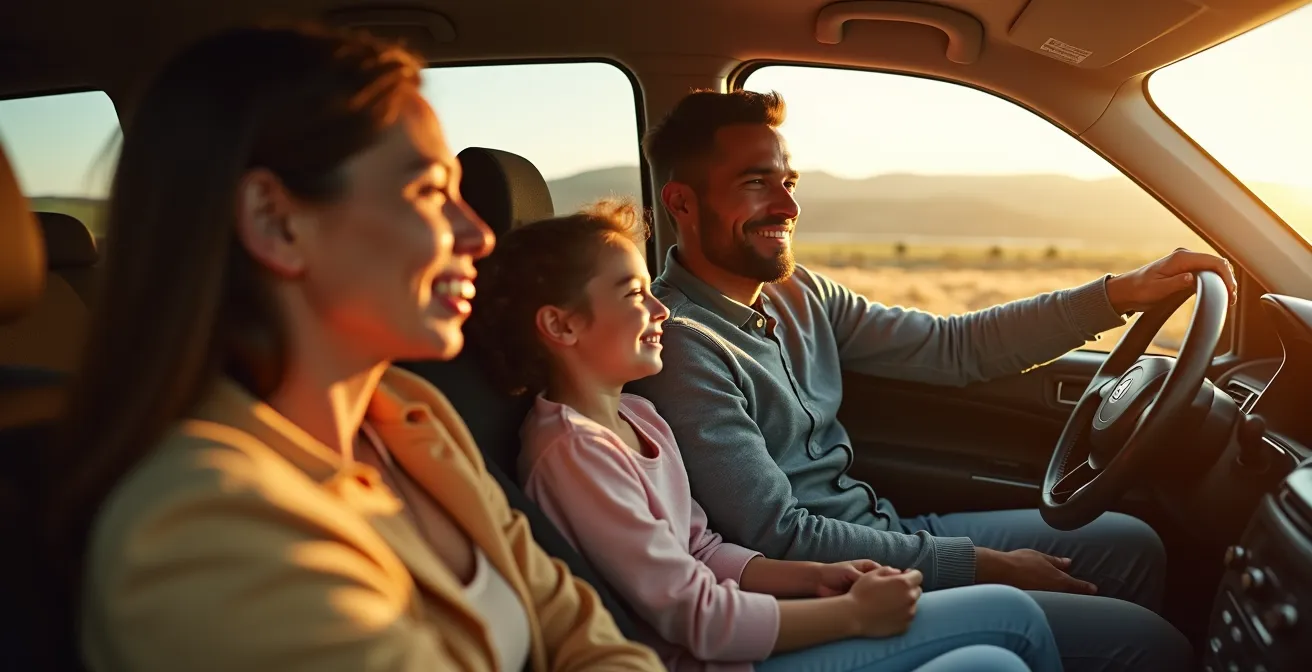
The secret to a successful family road trip isn’t distracting from the drive; it’s transforming the car into a unique environment that fosters deep connection.
- Leverage the car’s forward-facing layout to encourage low-pressure, “parallel conversations” that build trust.
- Manage the car’s “sensory bubble” with collaborative audiobooks and strategic snacks to prevent meltdowns before they start.
- Reframe stops not as delays, but as “proactive resets” to manage energy and create shared micro-adventures.
Recommendation: Instead of simply planning your route, start designing the journey itself as the first and most important part of your family vacation.
The bags are packed, the destination is exciting, but a six-hour drive looms ahead, filled with the potential for tense silence, endless screen time, and the dreaded question, “Are we there yet?” As a parent or partner, the fear that these long hours will be a bonding black hole is real. We’re often told the solution is to come prepared with distractions—a long playlist, a bag of treats, and tablets charged to full. We try to endure the journey, counting down the miles until the “real” vacation can begin.
But what if this perspective is wrong? What if the secret isn’t about distracting ourselves from the drive, but embracing the car itself as a unique catalyst for connection? This guide is built on a different premise: a long road trip isn’t an obstacle to overcome, but a powerful opportunity to bond. The very constraints of the vehicle—the shared space, the forward-facing view, the inability to escape—can be leveraged to create deeper, more meaningful interactions than you’d have over a crowded dinner table.
Here, we’ll move beyond the platitudes of “playing car games.” We will explore the psychology of why deep conversations flow more easily when you’re looking at the road, how to choose entertainment that unites rather than divides, and when a strategic stop can reset the entire family’s mood. It’s time to stop enduring the drive and start designing it as an intentional, memorable part of your family’s story.
Summary: Your Roadmap to a More Connected Journey
- Why Deep Conversations Happen Easier When Looking at the Road?
- How to Choose an Audiobook That the Whole Family Will Like?
- Cooler or Dry Snacks: Which Mess Is Easier to Clean?
- The Screen Mistake That Makes Passengers Sick Instantly
- When to Stop Driving to Reset the Mood Before a Meltdown?
- Why Getting Lost Together Bonds a Group Faster Than a Dinner?
- Why Being Near Water Lowers Your Heart Rate Instantly?
- What Defines a Successful Road Trip and How to Achieve It?
Why Deep Conversations Happen Easier When Looking at the Road?
The magic of car conversations lies in a concept we can call “parallel connection.” Unlike a face-to-face talk, which can feel confrontational, sitting side-by-side eliminates the pressure of direct eye contact. This shared forward focus on the road creates a less intense, more reflective environment. Both driver and passenger are part of a shared experience, looking out at a “shared horizon,” which makes it easier to open up about more significant topics without feeling scrutinized.
This phenomenon is supported by cognitive science. When driving, our brains are engaged in processing “optic flow”—the visual motion of our surroundings. This subtle cognitive load can actually help us relax and let our guard down. Research shows that our brains are incredibly adept at this, allowing humans to control vehicles at speeds 5-times faster than our evolved running speed, precisely because of this efficient processing. By redirecting some mental energy to the task of observing the road, we free up the emotional space for conversations to flow more naturally. The silence isn’t awkward; it’s a shared, comfortable pause in the dialogue.
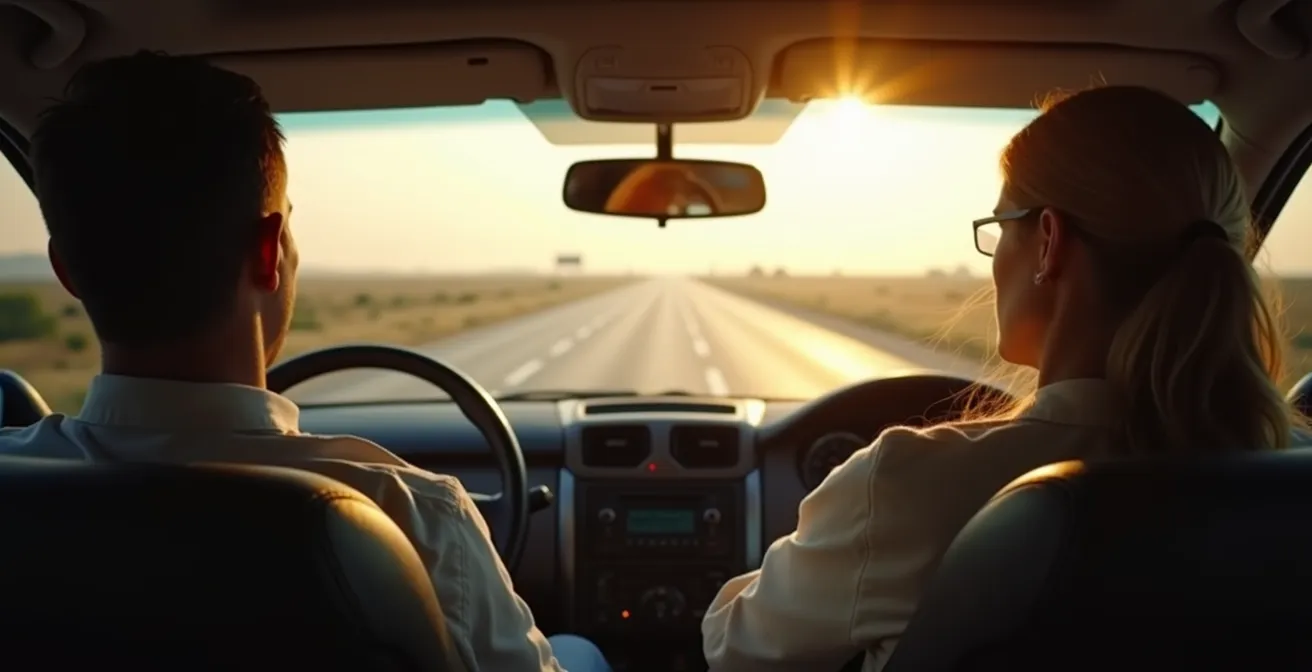
This setup is particularly effective for connecting with teenagers or more reserved partners. The lack of direct eye contact removes the feeling of being “on the spot,” allowing them to process their thoughts and speak more freely. The gentle, consistent motion of the car and the ever-changing scenery provide a soothing backdrop, making the vehicle a unique sanctuary for communication. To foster this, a parent can strategically use evening drive times, when kids are resting in the back, to have uninterrupted adult conversation.
How to Choose an Audiobook That the Whole Family Will Like?
An audiobook can transform the car’s interior from a collection of isolated individuals into a shared “sensory bubble.” However, choosing the right story is an art. The goal is to find a narrative that engages everyone, from the seven-year-old in the back to the adult in the passenger seat. The key is to think not just about genre, but about energy levels throughout the drive. A high-octane mystery is perfect for the alert morning hours, while a gentler classic might be better for winding down as you near your destination.
To avoid disagreements, consider a collaborative selection process before the trip. Allow each family member to nominate a book, and perhaps institute a “family veto” system where a book is only chosen if no one strongly objects. This sense of shared ownership is powerful. In one case, a family reported that involving their children in planning, including entertainment, dramatically improved engagement. Their seven-year-old was still talking about a space-themed road trip years later simply because his interests were prioritized in the planning phase.
Case Study: The Family Veto System
One family found that involving their kids in all trip planning decisions, including the choice of audiobooks and music, led to a breakthrough in trip harmony. By giving even the youngest member a voice and respecting their choices, they created a sense of collective adventure. Their 7-year-old, whose passion for space dictated the theme of one trip, remained highly engaged and fondly remembered the experience for years, proving that prioritizing shared interests is a powerful bonding tool.
A selection matrix can help structure this choice. By categorizing books by their engagement level and the best time to play them, you can create a curated listening experience that complements the rhythm of your journey. This turns the audiobook from a simple time-filler into a strategic tool for managing the collective mood.
| Engagement Level | Best For | Genre Examples | When to Play |
|---|---|---|---|
| High Engagement | Alert morning drives | Mystery, Adventure, Fantasy | First 2 hours of trip |
| Medium Engagement | Mid-journey periods | Historical fiction, Coming-of-age | After lunch break |
| Low Engagement | Evening/quiet times | Classic literature, Poetry | Final stretch or evening |
| Discussion Starter | Break times | Moral dilemmas, Philosophy | Before major stops |
Cooler or Dry Snacks: Which Mess Is Easier to Clean?
Snacks on a road trip are not just about fuel; they are a critical tool for mood regulation. However, the wrong snack can quickly turn a peaceful drive into a sticky, stressful mess. The choice between a cooler filled with yogurts and drinks versus a bag of dry crackers is more than a matter of preference—it’s a strategic decision about managing mess and emotional impact. A spilled juice box can create high stress and lingering smells, while a few cracker crumbs can be cleaned in seconds.
The key to successful road trip snacking is balancing accessibility with risk. Dry, low-crumb snacks like pre-portioned cereals or trail mix are ideal for in-transit eating, as they minimize the chance of a major spill. Cooler items or juicy fruits are best reserved for scheduled stops where everyone is stationary and cleanup is easier. This strategic approach minimizes driver distraction and passenger frustration, keeping the car a calm and positive space. Setting clear limits, like “we get a snack every 100 miles,” also helps manage expectations and prevent constant requests.
Thinking through the potential mess and emotional fallout of each snack choice allows you to curate a food experience that supports, rather than sabotages, family harmony. The following matrix helps visualize this risk assessment.
| Snack Type | Spill Risk | Emotional Impact | Clean-up Time | Best For |
|---|---|---|---|---|
| Dry crackers/cereal | Low | Minimal stress | 30 seconds | All passengers |
| Fresh fruit (sliced) | Medium | Moderate if sticky | 2-3 minutes | Scheduled stops only |
| Cooler items (yogurt, drinks) | High | High stress/smell risk | 5-10 minutes | Stationary eating |
| Pre-portioned trail mix | Very Low | None | 10 seconds | Driver-friendly |
Your Checklist for Mess-Free Snacking
- Pre-portion Everything: Before leaving, divide snacks into individual cups or resealable bags to avoid passing large, spill-prone containers around the car.
- Pack Surprise Treats: Keep a few special, coveted snacks hidden as a motivational tool or to celebrate milestones like crossing a state line.
- Set Clear Boundaries: Establish a simple rule for snack times (e.g., based on time or distance) to create a predictable routine and prevent constant grazing.
- Choose Low-Mess Foods: Prioritize items like whole-grain crackers, pretzels, cereals, and trail mix that produce minimal crumbs and no sticky residue.
- Keep Cleanup Close: Have a roll of paper towels and a pack of baby wipes within easy reach of the front seat for immediate, no-fuss cleanups.
The Screen Mistake That Makes Passengers Sick Instantly
Handing a child a tablet can feel like an instant solution for boredom, but one common mistake can make passengers physically ill and ruin the mood: letting them look down. The disconnect between what the eyes see (a static screen) and what the inner ear feels (the car’s motion) is a primary cause of motion sickness. Research consistently shows that looking down at screens is directly linked to carsickness. To prevent nausea, headaches, and general crankiness, any screen must be positioned straight ahead at eye level.
This is where seat-back mounts become an essential, non-negotiable piece of gear. By positioning the screen correctly, it allows the passenger’s peripheral vision to still register the car’s motion, helping the brain reconcile the conflicting sensory information. However, the best strategy is not just to manage screen use, but to replace it. Implementing a “Look Up Protocol” with designated screen-free periods encourages everyone to engage with each other and the world outside the window.

Set firm limits, such as 20-30 minute screen sessions followed by mandatory 10-minute breaks for looking out the window or playing a group game. Periodically banning all individual electronics can be a powerful reset, opening the door for spontaneous conversation, collaborative storytelling, or simply appreciating the passing landscape together. Instead of being a default activity, screen time becomes a deliberate, limited treat, preserving both passenger well-being and the opportunity for connection.
When to Stop Driving to Reset the Mood Before a Meltdown?
The secret to avoiding a full-blown family meltdown in the car is not reacting to the crisis, but pre-empting it with a “proactive reset.” A driver’s role is also that of an emotional barometer, constantly scanning for the subtle cues that tension is rising. Waiting for the screaming to start is too late. The early warning signs are often quiet: increased fidgeting, a sharp tone of voice, unusual silence, or rising irritability between siblings. Recognizing these signals is the first step; acting on them is the solution.
Instead of pushing through to the next major town, plan for preemptive stops every 90 to 120 minutes, even if it’s just for ten minutes at a scenic overlook. These short breaks are not delays; they are strategic investments in the trip’s emotional health. They allow everyone to stretch, get fresh air, and break free from the sensory confinement of the car. For children prone to sensory overload, these resets are especially critical, giving them a chance to regulate before they become overwhelmed.
This proactive approach can even begin before the car is in motion. One family implemented pre-trip discussions where each person shared what they expected from themselves and each other. This simple act of setting shared expectations dramatically reduced in-trip conflicts and the need for “emergency” stops. By monitoring for pre-meltdown indicators and having a plan for regular resets, you transform the journey from a test of endurance into a thoughtfully managed experience.
Why Getting Lost Together Bonds a Group Faster Than a Dinner?
A perfectly planned trip is efficient, but an imperfect one is memorable. While no one sets out to get lost, those unexpected detours and shared challenges are often where the strongest bonds are forged. A missed turn that leads to a charming small town, a flat tire that requires teamwork to fix, or a GPS glitch that reveals a stunning, un-planned vista—these moments of shared adversity break the monotony and force a family to work together. They create a common story, a piece of family lore that will be retold for years.
This is because navigating an unexpected challenge requires communication, collaboration, and a shared sense of humor. It shifts the dynamic from passive passengers to an active team with a common goal. This process builds resilience and trust far more effectively than a quiet, predictable drive. As one travel researcher notes, these shared experiences are the very fabric of family connection.
The shared experiences, the laughter over a flat tire, the collective awe over a beautiful sunset, and the joint excitement of discovering a hidden gem along the way, all contribute to creating unbreakable bonds.
– Family Travel Researcher, 7 Reasons to Embark on Family Road Trips
You can even build this spirit of discovery into your plan with what might be called “planned spontaneity.” Instead of driving straight through, use web searches to identify potential points of interest along your route—quirky roadside attractions, local parks, or historic sites. According to reports from families who embrace this approach, building in time for these spontaneous stops leads to far more memorable bonding experiences than a direct, non-stop journey.
Why Being Near Water Lowers Your Heart Rate Instantly?
When you’re choosing a place for a proactive reset, there’s a simple hack to maximize its calming effect: find water. Whether it’s a river, a lake, or a coastal viewpoint, the presence of water has a measurably soothing effect on our minds and bodies. This concept, known as “Blue Mind,” describes the mildly meditative state we fall into when we are near water. The sight and sound of it can lower our heart rate, reduce stress, and promote a sense of well-being—the perfect antidote to the confinement of a car.
Building these “Blue Mind” moments into your route is a simple but powerful strategy. Use mapping tools with terrain or satellite layers to identify water features along your drive. A quick 15-minute stop at a riverside park or a beach overlook can be more restorative than 30 minutes at a bustling service station. It gives everyone a chance to connect with nature, which is a proven mood-booster. This is confirmed by research on family bonding which shows that strategic rest stops in natural areas provide an opportunity for families to play and connect, a far cry from sitting in a noisy restaurant.
If water isn’t available, seek out the “Green Mind” effect of a forest or the expansive view from a hilltop. The goal is to find a natural, serene environment that provides a stark contrast to the enclosed space of the car. Prioritizing these nature-based stops transforms a simple break into a therapeutic reset, ensuring everyone gets back in the car feeling refreshed and re-centered.
Key Takeaways
- The Car’s Layout is a Feature, Not a Bug: Use the side-by-side seating to your advantage to foster low-pressure, high-quality conversations.
- Proactive Management Prevents Crises: Strategic choices about snacks, screens, and stops are not logistical details—they are fundamental tools for managing the family’s emotional energy.
- Success is Defined by Connection, Not Speed: The most memorable trips are often those with imperfect moments, shared discoveries, and intentional rituals that celebrate the journey itself.
What Defines a Successful Road Trip and How to Achieve It?
Ultimately, a successful road trip is not defined by how quickly you reach your destination, but by the quality of the moments you create along the way. It’s a shift in mindset from viewing the drive as a logistical necessity to seeing it as the first chapter of the vacation story. Success is measured in shared laughter, new inside jokes, and the quiet comfort of traveling together. It’s about transforming the car into a mobile sanctuary where the family can reconnect, away from the daily routines and distractions of home.
As one expert beautifully puts it, the journey itself is the celebration.
Road trips are not just a way to travel; they are a way to celebrate the essence of family, the joy of discovery, and the beautiful unpredictability of life.
– Travel Psychology Expert, Family Road Trips: Bonding on Wheels
Achieving this comes down to one core practice: ritualization. By creating small, repeatable traditions, you infuse the journey with meaning and a sense of special occasion. This can be as simple as designating a “kick-off” song that always plays as you pull out of the driveway, or creating special snacks that are only eaten when you cross a state line. Consider keeping a collaborative travel journal where each family member takes a turn writing, or taking snippets of video throughout the trip to edit into an epic family movie later. One fun idea is to host a “Road Trip Awards Ceremony” at the end, giving out silly prizes for “Best Snack Packer” or “Funniest Observation.”
Your next long drive doesn’t have to be something you just get through. Start designing your journey today as an intentional, joyful, and deeply connecting experience for the whole family.