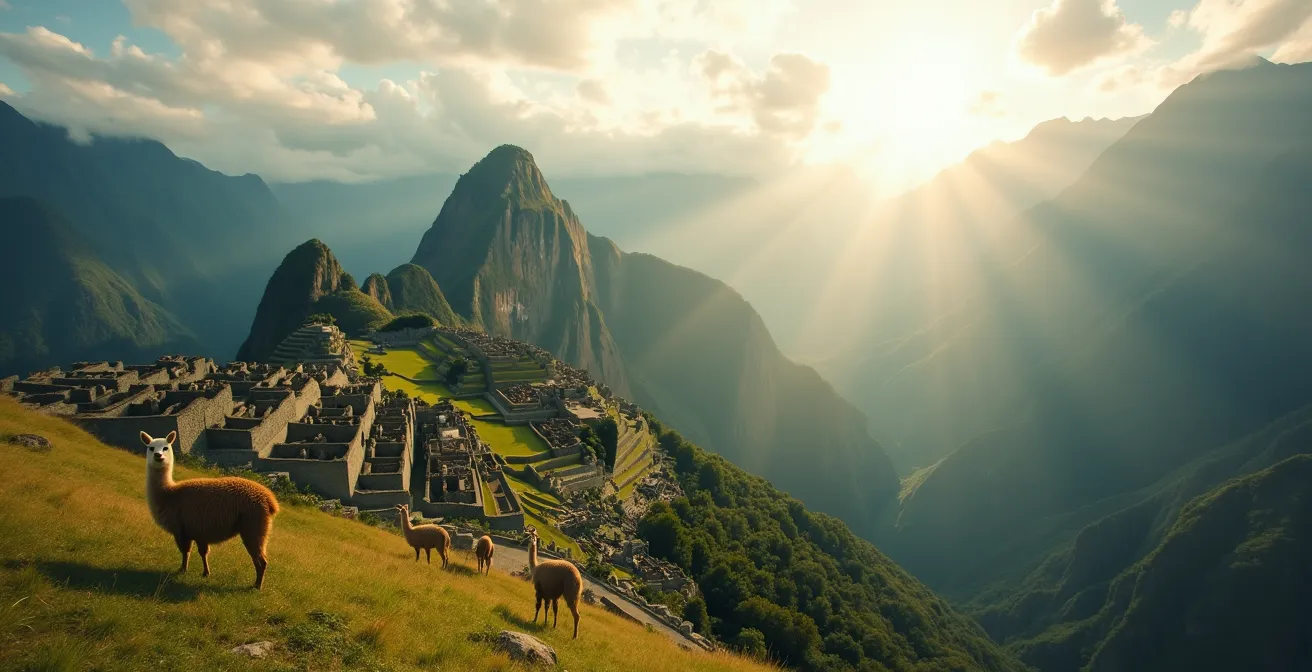
The secret to a stress-free Machu Picchu visit isn’t a longer checklist, but a smarter strategy that focuses on understanding the site’s operational systems.
- Altitude sickness can paradoxically affect fit travelers more due to higher oxygen demand; acclimatization is non-negotiable.
- The new circuit system creates specific paths; choosing the right one is crucial to avoid a rushed, “conveyor-belt” experience.
- Strategic timing—like opting for a late afternoon visit—can provide a crowd-free, golden-hour experience that morning visitors miss.
Recommendation: Shift your planning from simply booking tickets to making deliberate, strategic trade-offs between timing, access, and comfort to craft your perfect experience.
You’ve dreamt of this moment for years: watching the sun crest over the Andean peaks, illuminating the mystical stone city of Machu Picchu. But as the dream gets closer to reality, a wave of anxiety hits. You hear whispers of overwhelming crowds, complex ticketing systems, and the dreaded altitude sickness. The common advice—”book early,” “stay hydrated”—feels woefully inadequate for the logistical puzzle you face. This isn’t just another vacation; it’s a pilgrimage, and the fear of a misstep ruining this once-in-a-lifetime experience is very real.
What if the key to unlocking a profound and personal visit isn’t about ticking off a generic list of tips, but about understanding the hidden operational systems that govern the site? The truth is that Machu Picchu, in its effort to preserve its magic, operates on a set of rules and flows. Seeing these not as obstacles but as a system to navigate is the game-changer. It allows you to move from being a passive tourist, shuffled along by the masses, to a strategic visitor who can choreograph a truly personal journey.
This guide is designed to give you that strategic advantage. We will deconstruct each logistical challenge, from the counter-intuitive risks of altitude sickness to the nuances of the bus queue. By the end, you won’t just have a plan; you’ll have a new mindset, empowering you to transform potential stress into the serene, awe-inspiring experience you’ve always imagined.
To help you master this logistical choreography, this article breaks down every critical decision point. Explore the sections below to build your strategy, step by step, for a flawless journey to the heart of the Inca empire.
Contents: Your Strategic Guide to a Flawless Machu Picchu Trip
- Why Altitude Sickness Hits Fit Travelers Harder Than You Think?
- How to Navigate the New Circuit System to See What You Want?
- Inca Trail or Luxury Train: Which Arrival Method Suits Your Style?
- The 2-Hour Mistake That Ruins the Machu Picchu Experience
- When to Queue for the Bus to Actually Catch the Sunrise?
- When to Visit Exposed Ruins to Avoid Heatstroke and Crowds?
- How to Secure High-Demand Park Permits 6 Months in Advance?
- How to Explore Historic Remnants Safely and Respectfully?
Why Altitude Sickness Hits Fit Travelers Harder Than You Think?
One of the most common misconceptions about visiting the high Andes is that physical fitness is a shield against altitude sickness, or *soroche*. In reality, the opposite can be true. While it seems counter-intuitive, highly fit individuals can sometimes be more susceptible to acute mountain sickness. This is because their higher muscle mass and faster metabolism create a greater oxygen demand even at rest. When you ascend to Cusco’s 3,400 meters (11,152 ft), this “oxygen debt” becomes more pronounced and immediate, leading to headaches, nausea, and fatigue that can derail the start of your trip. Recognizing this risk is the first step in proper preparation, as altitude sickness statistics show that 40-50% of travelers arriving in Cusco experience some symptoms, regardless of their fitness level.
The key is not to power through it, but to respect the physiological challenge. Your body needs time to create more red blood cells to transport oxygen more efficiently. This process, known as acclimatization, is a biological necessity, not a sign of weakness. Pushing your body with strenuous activity upon arrival, a common temptation for active travelers, can worsen symptoms significantly. The best strategy is a deliberate and patient one, allowing your body to adapt slowly before you undertake any major physical exertion.
To properly manage this risk, a structured approach is far more effective than simply hoping for the best. Think of it as the first phase of your logistical choreography: giving your body the time and resources it needs to perform at its best when you finally reach the citadel.
Your Acclimatization Action Plan: A Tiered Strategy
- Acclimatize: Spend at least two to three days in Cusco or the lower-altitude Sacred Valley (approx. 2,900m) before any major activity.
- Consult and Medicate: Speak with your doctor about preventative medication like Diamox (Acetazolamide), starting it 24-48 hours before ascent if prescribed.
- Hydrate Proactively: Drink 2-3 liters of water daily, starting a few days before you travel, and maintain this intake.
- Eat Smart: Opt for a high-carbohydrate, low-fat diet with smaller, more frequent meals to ease digestion and provide sustained energy.
- Moderate Your Habits: Strictly avoid alcohol and limit caffeine during your acclimatization period, as both can contribute to dehydration and disrupt sleep.
How to Navigate the New Circuit System to See What You Want?
Gone are the days of freely wandering the ancient city. To protect the UNESCO World Heritage site, authorities have implemented a strict system of one-way circuits. This is perhaps the most critical piece of the logistical puzzle to solve, as your choice of circuit directly determines what you will see and, more importantly, what you will miss. Understanding this system is the difference between a comprehensive tour and a frustratingly brief glimpse. There are several main circuits, each designed with a different type of visitor in mind and with varying durations and access points.
The most important strategic decision is to match a circuit to your personal priorities. Are you a photographer seeking that classic postcard shot? Circuit 1 is designed for you. Do you want the most complete tour of the main temples and plazas? Circuit 2 is the best overall option for first-timers. This choice dictates your entire experience, so studying the options beforehand is non-negotiable.
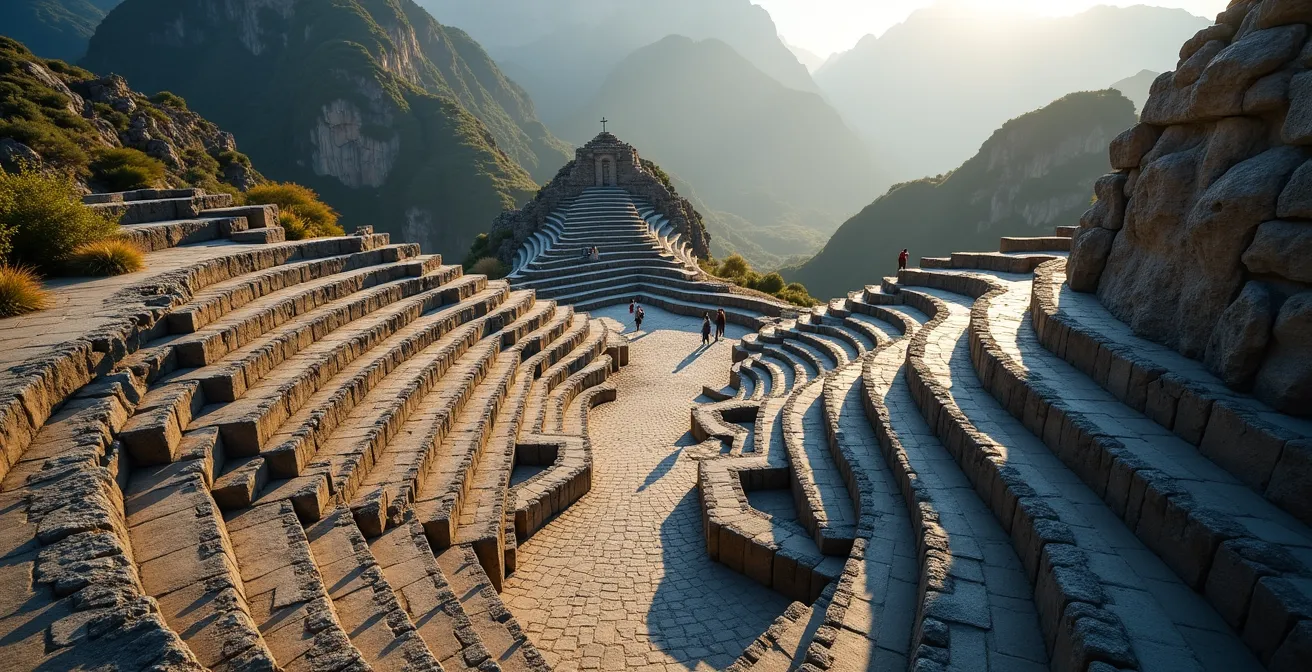
This map illustrates the maze-like quality of the site and how different paths grant access to distinct sectors. The key is to see these paths not as limitations, but as curated experiences. Choosing Circuit 4, for example, gives you access to the coveted Huayna Picchu hike but may limit your time in the main citadel. It’s a strategic trade-off: a breathtaking aerial view in exchange for less time among the lower ruins. The table below breaks down the primary options to help you make an informed choice.
| Circuit | Best For | Key Features | Duration |
|---|---|---|---|
| Circuit 1 | Photographers seeking panoramic views | Guardian’s House viewpoint, classic postcard photo spot, upper terrace | 1 hour |
| Circuit 2 | First-time visitors wanting comprehensive tour | Temple of the Sun, Sacred Plaza, Intihuatana, best overall experience | 2-3 hours |
| Circuit 3 | Mobility-conscious visitors, less stairs | Lower ruins, gentler walking paths, wheelchair accessible areas | 2 hours |
| Circuit 4 | Huayna Picchu hikers | Access to mountain trail plus lower circuit ruins | 4-6 hours |
Inca Trail or Luxury Train: Which Arrival Method Suits Your Style?
The journey to Machu Picchu is as much a part of the experience as the destination itself. The two classic approaches—the grueling but rewarding 4-day Inca Trail trek versus the comfortable and scenic luxury train ride—are often presented as a simple binary choice. However, the decision is far more nuanced and should be based on your personal travel style and what kind of emotional state you want to be in when you finally arrive at the Sun Gate. Do you want the profound sense of accomplishment that comes from an “earned” arrival on foot, or do you prefer to arrive rested, comfortable, and ready to explore?
The Inca Trail is an immersion into history, a physically demanding pilgrimage that builds anticipation with every step. You arrive exhausted but exhilarated. However, this path comes with its own stressors, such as the anxiety of keeping pace with a group and the need to book permits nearly a year in advance. The luxury train, like the Hiram Bingham or Vistadome, offers panoramic views, gourmet meals, and a stress-free journey, depositing you in Aguas Calientes ready for the final ascent. The trade-off is a less intimate connection to the landscape and the chaotic boarding process in the town below.
But these are not your only options. For those seeking a middle ground, several alternatives offer a blend of trekking and comfort. The 2-Day “Short Inca Trail” provides a taste of the trekking experience, including the iconic arrival through the Sun Gate, without the four-day commitment. Other less-crowded treks, like the Salkantay or Lares, offer stunning Andean scenery and connect to a train for the final leg. These hybrid options allow you to experience the best of both worlds, avoiding some of the pressure and crowds of the classic trail while still earning your view.
The 2-Hour Mistake That Ruins the Machu Picchu Experience
One of the biggest mistakes a visitor can make is underestimating the time needed to truly absorb Machu Picchu. Driven by tight schedules and the one-way circuit system, many visitors find themselves on a sub-2-hour “conveyor belt” through the site. While travel statistics reveal that the average tourist spends only 3-4 hours at Machu Picchu, many experience a much shorter, rushed visit. This happens when visitors choose the most direct circuits without realizing they are designed for quick photo stops, not deep exploration. This rushed feeling is the single biggest complaint from travelers and can leave you feeling like you merely saw the site instead of experiencing it.
The “conveyor belt effect” is a real phenomenon, especially on circuits designed to move large numbers of people through quickly. The one-way flow, combined with watchful guards, can make you feel pressured to keep moving, even if your ticket theoretically allows for a longer stay. You snap a few photos, see the main plaza from a distance, and before you know it, you’re being guided toward the exit. This leaves no time for quiet contemplation, for noticing the intricate details of the stonework, or for simply sitting and absorbing the immense scale and energy of the place.
The only reliable way to break free from this is to build more time into your ticket. The most effective strategy is to purchase a ticket that combines the main citadel with a hike up either Huayna Picchu or Machu Picchu Mountain. These combination tickets grant you re-entry or a significantly longer time slot (4-6 hours), giving you the freedom to complete a full circuit and then enjoy a breathtaking panoramic view, far from the biggest crowds. This is the ultimate strategic trade-off: a higher ticket price and a physical challenge in exchange for the priceless gift of time.
| Visit Duration | What You Experience | What Gets Cut | Emotional Impact |
|---|---|---|---|
| 2 Hours | Quick circuit photo stops, main plaza view | Temple of the Sun reflection, residential sector exploration, peaceful moments | Rushed, conveyor-belt feeling |
| 4+ Hours | Full circuit plus mountain hike option, time for contemplation | Nothing – complete experience possible | Immersive, transformative experience |
When to Queue for the Bus to Actually Catch the Sunrise?
The iconic image of sunrise over Machu Picchu is a powerful motivator, but the logistics of achieving it are a significant source of stress. The reality is that a handful of buses begin their 25-minute winding ascent from Aguas Calientes at 5:30 AM for the 6:00 AM park opening. To be on one of those first buses requires a pre-dawn commitment that can catch many travelers by surprise. Simply showing up at 5:00 AM will place you hundreds deep in a queue, guaranteeing you miss the first light.
A more effective strategy is to reframe the goal. Instead of chasing the literal “sunrise,” aim for the “golden light” that bathes the ruins 30-45 minutes after the gates open. This light is often more magical for photography and gives you a slight buffer. To achieve this, your queue time is critical and varies by season. In the high season (May-September), you must be in line by 4:00-4:15 AM. In the low season, 4:30-4:45 AM might suffice. On peak holidays, even earlier is safer. You’ll need a headlamp, rain gear, and patience. The alternative for the very fit is the steep 90-minute uphill hike from Aguas Calientes, a challenging but rewarding way to bypass the bus queue entirely.
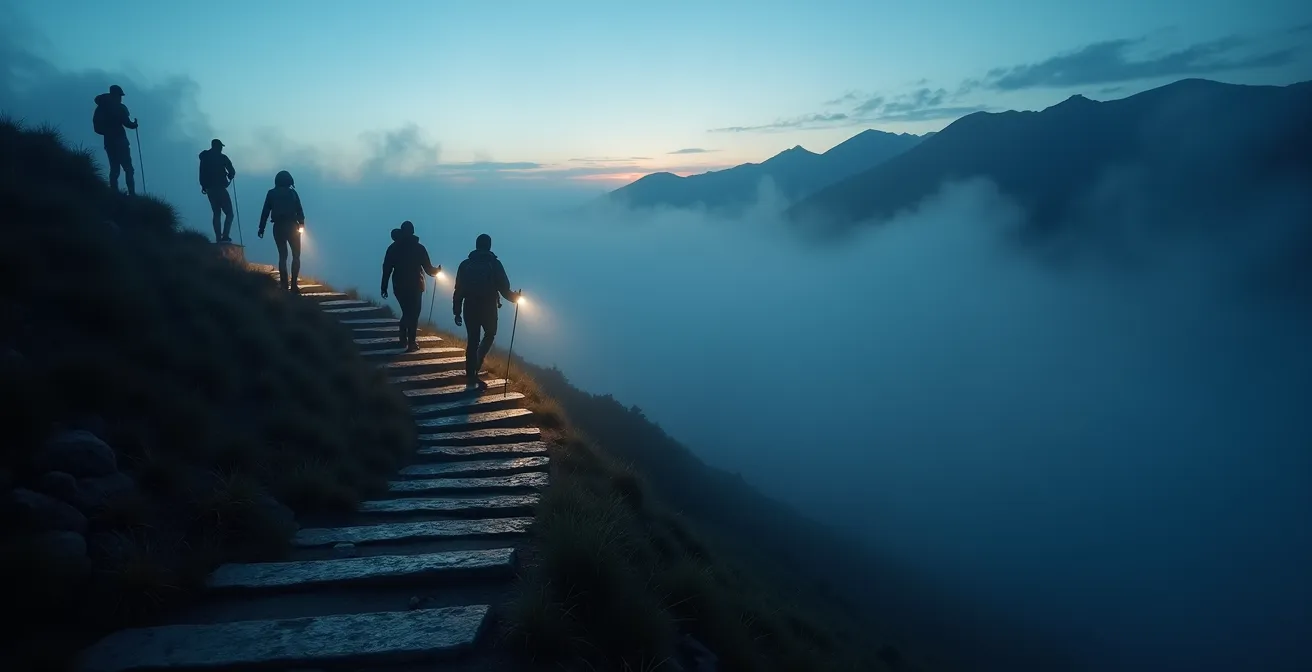
The pre-dawn wait is a shared experience of quiet anticipation, a modern-day pilgrimage before the main event. It requires preparation, but it also builds a sense of camaraderie with fellow travelers. However, if an ultra-early start sounds like your personal nightmare, consider the counter-intuitive alternative: an afternoon entry. The golden hour before the site closes can be just as spectacular, with dramatically fewer people.
When to Visit Exposed Ruins to Avoid Heatstroke and Crowds?
The two biggest physical drains on your Machu Picchu experience, after the initial ascent, are the intense Andean sun and the relentless crowds. Both of these problems peak at the exact same time. Data on visitor patterns clearly shows that 11 AM to 3 PM experiences the highest visitor congestion. This is when the day-trippers from Cusco arrive, filling the narrow pathways and creating bottlenecks at key viewpoints like the Guardian’s House and the Temple of the Sun. This is also when the sun is at its most powerful, with little shade available in the exposed stone city, increasing the risk of heat exhaustion and sunburn.
The conventional wisdom is to “go early,” but as we’ve seen, that comes with its own challenges. The truly strategic and far more comfortable alternative is the “Afternoon Shadow Strategy.” By booking a late afternoon entry slot (e.g., 2:00 PM or 3:00 PM), you arrive just as the morning and midday crowds are beginning to dissipate. More importantly, after 2:00 PM, the surrounding peaks, including Machu Picchu Mountain itself, begin to cast long shadows over key areas like the Main Plaza and the Sacred Plaza. This provides welcome relief from the intense sun, making exploration significantly more pleasant.
This strategy offers a premium experience for the price of a standard ticket. You get to explore the citadel in relative peace, bathed in the soft, golden light of the late afternoon—a photographer’s dream. There is a palpable sense of tranquility as you watch the site empty out, allowing you to connect with its ancient spirit without the constant jostling of a crowd. It’s a powerful reminder that in travel, sometimes the best strategy is to move against the current.
How to Secure High-Demand Park Permits 6 Months in Advance?
Machu Picchu’s popularity means that access is strictly limited to protect the site. Tickets, especially those including hikes up Huayna Picchu or Machu Picchu Mountain, sell out months in advance. For the classic 4-day Inca Trail, you may need to book nearly a year ahead. This makes securing your permit the most time-sensitive part of your planning. The general rule is to book a minimum of 3 months in advance for a standard citadel visit and at least 6 months in advance for any ticket that includes a mountain hike.
You have two primary methods for booking: directly through the official government website (now tuboleto.cultura.pe) or through an authorized third-party travel agency. Each path presents a strategic trade-off between cost and convenience. Booking directly on the official site is the cheapest option, but the site can be buggy, is primarily in Spanish, and offers no customer support if something goes wrong. Using an authorized agency costs more due to service fees but provides English-speaking support, assistance with bundling tickets and tours, and peace of mind.
But what if your desired date is already sold out? Don’t panic. This is where a Plan B becomes essential. First, check availability for alternative hikes like Machu Picchu Mountain or the smaller Huchuy Picchu, which often have more availability than the famous Huayna Picchu. Second, be persistent. Check the official website daily for cancellations, as tickets do get released back into the system. You can even set up a browser page monitor to alert you automatically. Finally, consider visiting in the shoulder season (April-May or September-October) or even the wet season (November-March), when availability is much better and the landscape is lush and green.
| Booking Method | Best For | Advantages | Disadvantages |
|---|---|---|---|
| Official Site (tuboleto.cultura.pe) | Flexible travelers comfortable with a Spanish interface | Lower cost, direct booking, all options visible | Sometimes buggy, Spanish language, no support |
| Authorized Agency | Those needing specific dates or bundled packages | English support, package deals, stress-free booking | Higher cost, agency fees, less flexibility |
Key Takeaways
- Strategic planning is about understanding and navigating Machu Picchu’s systems, not just following a checklist.
- Your physical and emotional state upon arrival is a key factor; choose your journey (trek vs. train) and acclimatization plan accordingly.
- Time is your most valuable asset. Avoid the “2-hour mistake” by booking a longer circuit or mountain hike to ensure an immersive experience.
How to Explore Historic Remnants Safely and Respectfully?
Once inside the citadel, your final challenge is to navigate the space in a way that is both enriching for you and respectful of the site and other visitors. The one-way circuits and watchful guards are there for a crucial reason: conservation. Every footstep contributes to the erosion of this fragile wonder. Understanding the “why” behind the rules transforms them from annoying restrictions into a collective responsibility. For instance, the sharp whistles from the guards are not meant to be aggressive; they are a communication system. One short blast usually means “please move along” to prevent bottlenecks. A long, sharp blast indicates you’ve strayed from the designated path and need to return immediately.
Respectful exploration extends beyond the physical. In our digital age, the principle of “Leave No Trace” has evolved to include “Leave No Digital Trace.” This means being mindful of your social media footprint. While sharing your incredible photos is part of the joy, avoid geotagging specific, sensitive, or lesser-known spots within the citadel. This practice can create digital “hotspots,” driving crowds to fragile areas not equipped to handle heavy traffic and disrupting the sense of discovery for future visitors. Be a steward of the site’s tranquility, not just its physical stones.
Practicing mindfulness is key. Instead of rushing to get the perfect selfie at a crowded viewpoint, find a quieter spot to simply sit and observe. Use your phone’s burst mode to capture a shot quickly without blocking the path for others. Be aware of the one-way flow and step aside to let others pass. By approaching your visit with a spirit of stewardship and awareness, you not only enhance your own experience but also play a vital role in preserving the magic of Machu Picchu for generations to come. It is the final, and perhaps most important, piece of the logistical and emotional choreography of your journey.
Now that you are equipped with the strategies to navigate the complexities of Machu Picchu, the next step is to put this knowledge into action. Begin by outlining your priorities, assessing your timeline, and making the crucial first decisions about your travel style and desired experience.