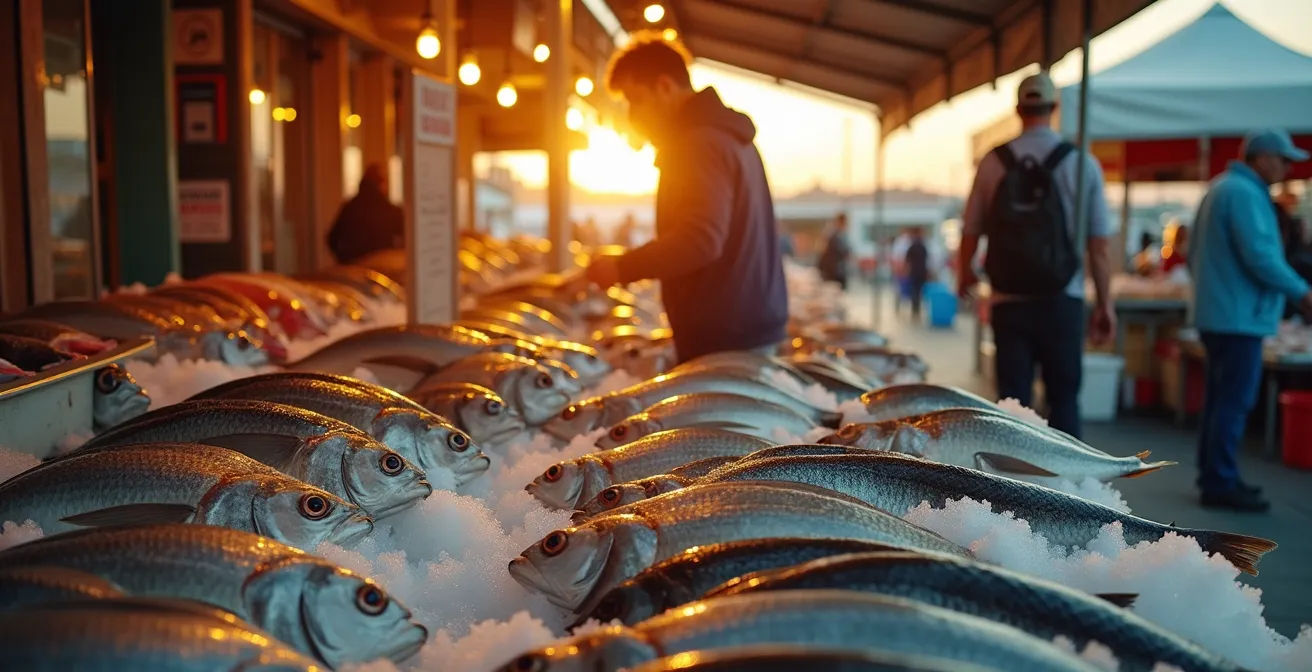
True seafood safety doesn’t come from smelling the fish; it comes from a clinical assessment of its journey from water to plate.
- Visual cues like clear eyes and red gills are far more reliable indicators of freshness than smell, which can be misleading.
- Modern aquaculture and supply chain controls have made old rules, like the “R month” for oysters, obsolete. Water quality is the key factor.
Recommendation: Adopt a food inspector’s mindset. Question the source, observe the physical evidence, and understand the science behind preparation methods before you eat.
The allure of a seaside vacation is often synonymous with the promise of fresh seafood: oysters glistening on ice, a whole grilled fish with herbs, or a zesty bowl of ceviche. For any seafood lover, this is paradise. Yet, this indulgence is frequently shadowed by a nagging concern—the risk of foodborne illness. Many travelers rely on well-worn advice passed down through generations: “make sure it doesn’t smell fishy,” “only eat at busy places,” or “avoid raw shellfish entirely.” While not entirely baseless, these platitudes are insufficient for navigating the complexities of modern seafood supply chains and culinary practices.
Relying on such folklore is like navigating with an outdated map. The real key to enjoying seafood safely is not to fear it, but to understand it. It requires shifting from a passive consumer to an active, informed assessor—adopting the mindset of a food safety inspector. This means learning to read the objective, clinical signs of freshness, understanding the difference between a food that is chemically altered and one that is thermally sterilized, and recognizing the logistical markers of a high-quality establishment versus a tourist trap. This guide is not about instilling fear; it’s about providing the knowledge to dismantle that fear.
This article will deconstruct the common myths and equip you with a systematic, evidence-based framework for assessing seafood safety. We will examine why a fish’s eyes tell a more accurate story than its smell, how to confidently eat oysters year-round, and the critical difference in risk between ceviche and grilled fish. By the end, you will be able to evaluate a menu, a restaurant, and a plate with the discerning eye of an expert, ensuring your culinary adventures remain delightful and, most importantly, safe.
Summary: An Inspector’s Guide to Safely Navigating Seafood on Your Travels
- Why Clear Eyes on a Fish Matter More Than the Smell?
- How to Eat Oysters Safely in Months Without an “R”?
- Ceviche or Grilled: Which Is Safer for a Sensitive Stomach?
- The “Peppery Taste” Warning That Means You Should Stop Eating Immediately
- When to Arrive at a Seafood Restaurant to Get the Morning Catch?
- The Hygiene Mistakes That Cause Food Poisoning on Day 1
- How to Spot a “Tourist Menu” Trap in a Seaside Town?
- How to Navigate a Vibrant Culinary Scene Without Falling for Tourist Traps?
Why Clear Eyes on a Fish Matter More Than the Smell?
The most common piece of seafood advice is to “smell it.” However, this is a flawed, last-resort assessment. The initial stages of bacterial decay produce compounds that are not easily detected by the human nose. Furthermore, a strong “fishy” odor, often caused by the breakdown of trimethylamine oxide into trimethylamine, can be masked by marinades or simply be a characteristic of certain species. A much more reliable and clinical indicator is the condition of the fish’s eyes and gills. This is the first step in a professional-grade visual assessment.
The eyes should be clear, bright, and slightly bulging, not cloudy, sunken, or opaque. Cloudiness is a direct sign of protein degradation and cellular breakdown, a process that begins shortly after death. It’s a clear visual cue that the fish is well past its prime. Similarly, the gills are a crucial checkpoint. When you lift the operculum (gill cover), the filaments underneath should be a vibrant, bright red or pink. Gills that appear brownish, grayish, or slimy indicate a lack of oxygen and the onset of decay. The flesh itself should be firm and spring back when pressed gently; if an indentation remains, it signifies a loss of cellular integrity.
Only after these visual checks are complete should the smell test be performed. A truly fresh fish should smell of the clean, briny ocean or have no odor at all. Any hint of ammonia, sourness, or an overwhelmingly “fishy” smell is a definitive red flag. By prioritizing these visual, objective markers over the subjective sense of smell, you move from guesswork to a more scientific evaluation of freshness.
This systematic approach provides a far more accurate picture of the fish’s condition before it is even prepared, significantly reducing your risk.
How to Eat Oysters Safely in Months Without an “R”?
The age-old adage to only eat oysters in months with an “R” (September through April) originates from a time before modern refrigeration and aquaculture. The rule was a practical way to avoid oysters harvested from warm summer waters, where the risk of harmful bacteria like Vibrio vulnificus is highest. Today, this rule is largely obsolete. The safety of an oyster has far more to do with its origin and handling than the time of year.
Modern oyster farming relies on stringent water quality monitoring. Reputable farms are located in clean, controlled waters and regularly test for pathogens. A 2018 norovirus outbreak in British Columbia, for instance, was traced not to the season, but to human sewage contamination in specific harvest waters, leading to enhanced surveillance protocols. This highlights that the source is paramount. Farmed oysters often have a lower risk profile than wild ones due to this continuous oversight and complete supply chain traceability. When in doubt, always ask your server about the origin of the oysters. A knowledgeable restaurant will be proud to tell you the specific bay or farm they came from.
The following table breaks down the key safety differences between wild and farmed oysters, demonstrating why farming practices provide a greater degree of control.
| Factor | Wild Oysters | Farmed Oysters |
|---|---|---|
| Water Monitoring | Variable, weather-dependent | Continuous, controlled |
| Vibrio Risk | Higher in waters >20°C/68°F | Lower due to site selection |
| Harvest Control | Seasonal closures common | Year-round with testing |
| Traceability | Limited to harvest area | Full supply chain tracking |
Therefore, instead of adhering to an outdated calendar rule, focus on the oyster’s provenance. Choosing oysters from reputable, monitored farms is the modern, evidence-based approach to enjoying them safely year-round.
This knowledge allows you to ask the right questions and make an informed choice, no matter the month.
Ceviche or Grilled: Which Is Safer for a Sensitive Stomach?
When faced with a menu in a tropical location, the choice between raw-prepared ceviche and a fully cooked grilled fish presents a clear risk-reward calculation. While delicious, ceviche is fundamentally a raw dish. The citric acid from lime or lemon juice causes a chemical process called protein denaturation. This process turns the fish’s flesh opaque, giving it the appearance and texture of being cooked. However, it is crucial to understand that this is not a sterilization process.
This chemical “cooking” does not kill all harmful bacteria or, more importantly, parasites. True safety from pathogens is only reliably achieved through heat. The standard food safety recommendation is to cook fish to an internal temperature of 145°F (63°C) to eliminate potential parasites and bacteria. For a sensitive stomach, a thoroughly grilled, baked, or fried fish is unequivocally the safer option as the heat provides a definitive kill step for microbial threats.
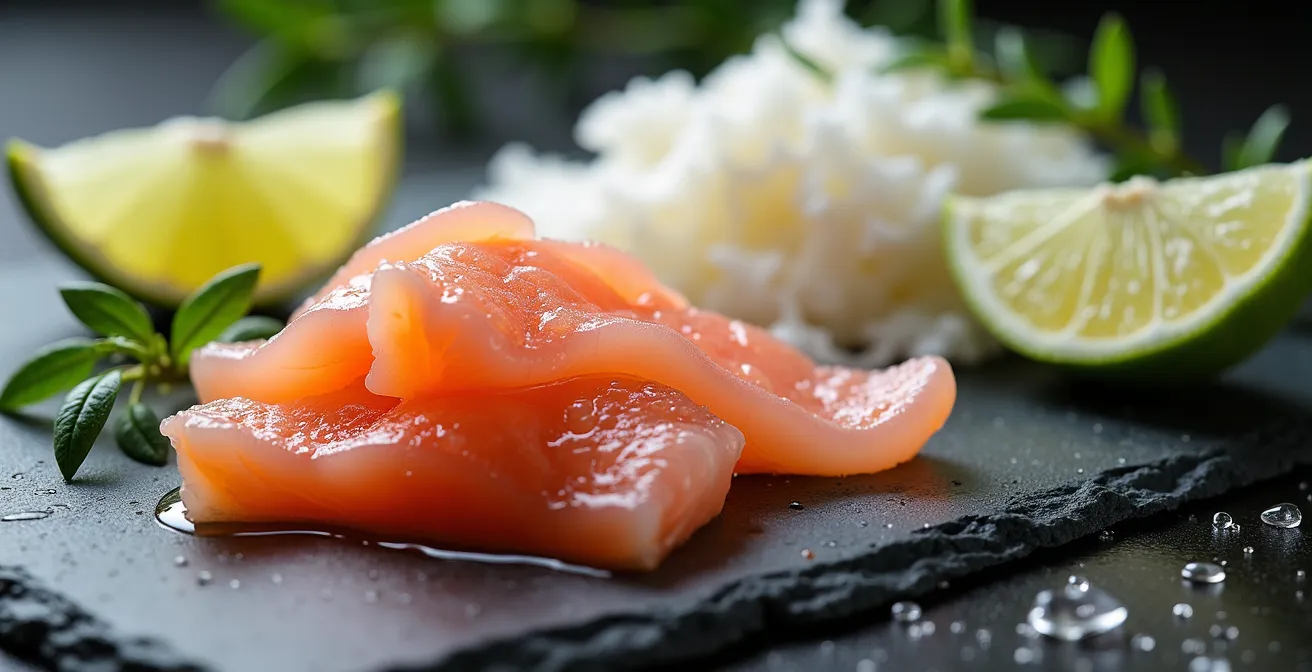
This does not mean all ceviche is unsafe. The safety of ceviche hinges entirely on one factor: the quality and handling of the raw fish. To be safe for raw consumption, fish must be “sashimi-grade” or “sushi-grade.” This is not a regulated term but an industry standard implying the fish was flash-frozen at extremely low temperatures (e.g., -31°F for 15 hours) to kill any parasites. When ordering ceviche, you are placing your trust entirely in the restaurant’s sourcing and hygiene practices. If you have any doubts about the establishment’s quality or if you have a compromised immune system, choosing the grilled option is the most prudent decision.
Ultimately, the choice depends on your personal risk tolerance and your confidence in the restaurant’s standards.
The “Peppery Taste” Warning That Means You Should Stop Eating Immediately
Among the most dangerous and deceptive forms of seafood illness is scombroid poisoning. It is not an infection caused by a virus or bacteria, but a chemical reaction caused by consuming fish with high levels of histamine. This occurs when certain species of fish—most commonly tuna, mackerel, mahi-mahi, and sardines—are not kept properly chilled after being caught. Bacteria on the fish’s skin break down an amino acid called histidine into histamine.
Crucially, histamine is heat-stable, meaning cooking does not destroy it. A piece of fish can be thoroughly grilled and still cause severe scombroid poisoning. The most telling and immediate warning sign is a distinct “peppery” or “metallic” taste in the mouth upon the first bite. This is not a seasoning; it is your body’s first alert to the presence of high histamine levels. Other symptoms can appear rapidly, often within 30 minutes, and include facial flushing, hives, sweating, headache, and palpitations. Because it mimics an allergic reaction, it is often misdiagnosed.
If you ever taste this peppery flavor, your response must be immediate and decisive. Do not swallow the bite, and do not continue eating. The entire loin of fish is likely contaminated. Calmly and discreetly informing the restaurant staff is not just for your safety, but for the safety of other patrons who may have ordered the same fish. This is a serious food safety failure, and recognizing this specific taste is a critical skill for any seafood enthusiast.
Action Plan: Immediate Scombroid Poisoning Response Protocol
- Spit out the fish immediately and discreetly if you taste peppery/metallic flavor.
- Stop eating and alert dining companions to avoid the dish.
- Inform restaurant staff calmly – the entire fish loin is likely contaminated.
- Take an antihistamine if available, as scombroid is a histamine reaction.
- Monitor for symptoms: facial flushing, hives, headache, and palpitations within 30 minutes.
This immediate response protocol can prevent a mild discomfort from escalating into a severe medical event.
When to Arrive at a Seafood Restaurant to Get the Morning Catch?
A common myth among travelers is that to get the freshest fish, one must dine at a restaurant right on the waterfront, timing their meal with the return of the fishing boats. The reality of modern restaurant supply chains is quite different. The romantic image of a chef buying fish directly off a boat is rare. Instead, most restaurants work with trusted commercial suppliers who handle the primary distribution.
Industry analysis reveals a clear logistical pattern. These suppliers typically receive fish from various sources in the early morning and perform their own processing and portioning. They then make their delivery rounds to restaurants, usually between 9 AM and 11 AM. This means the fish that arrives at the restaurant is prepared for the first service of the day: lunch. Consequently, dining during the lunch rush (approximately 12 PM to 2 PM) often gives you access to the day’s absolute freshest catch, which has only been in the restaurant’s kitchen for a few hours. By dinner, that same fish has been stored for an additional 6 to 8 hours.
A smart diner’s question is not a generic “Is the fish fresh?”—to which the answer will always be yes—but a more specific, “What came in this morning?” This signals to the staff that you are an informed customer and prompts a more honest answer about the day’s best offerings. This logistical insight is far more valuable than simply choosing a restaurant based on its proximity to the water.
As one expert notes, the location itself can be misleading. In the New York Sea Grant Seafood Safety Guidelines, Ken Gall points out a key observation:
The most authentic and freshest seafood is often found where local fishermen themselves eat—typically simple, no-frills eateries a block or two away from the main tourist waterfront.
– Ken Gall, New York Sea Grant Seafood Safety Guidelines
By combining an understanding of supply chain timing with a strategic choice of location, you dramatically increase your chances of getting a truly fresh and safe meal.
The Hygiene Mistakes That Cause Food Poisoning on Day 1
Even if you’ve chosen the freshest fish from the most reputable restaurant, your meal’s safety can be compromised by factors that have nothing to do with the seafood itself. The most common culprit is cross-contamination, often stemming from poor general hygiene at the table. Many travelers are so focused on the main dish that they overlook the minefield of shared items that countless other hands have touched.
Consider the typical restaurant table: salt and pepper shakers, olive oil and vinegar cruets, a basket of bread, and reusable menus. These items are high-touch surfaces that are rarely, if ever, sanitized between customers. A previous patron could have handled raw currency, coughed into their hand, or simply not practiced good hygiene, transferring bacteria and viruses onto these objects. When you then handle these items and proceed to eat—especially with your hands, as with bread or certain shellfish—you are creating a direct pathway for pathogens to enter your system. This is one of the fastest ways to contract traveler’s diarrhea or other foodborne illnesses on the very first day of your trip.
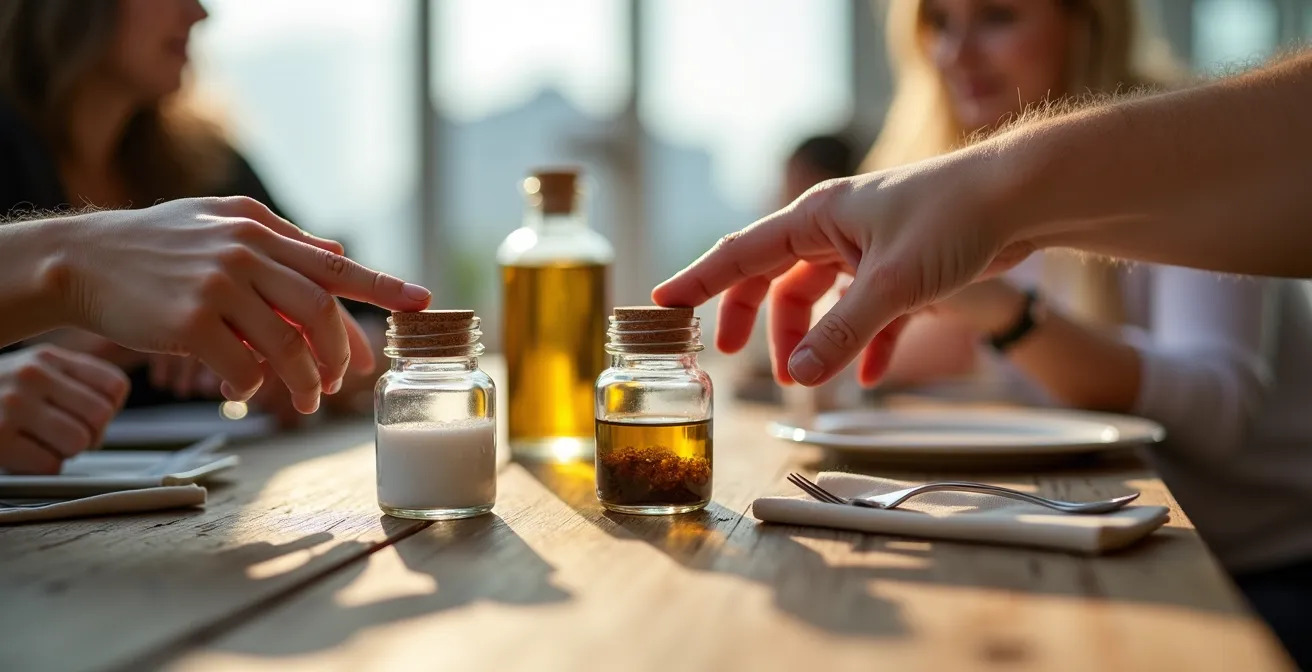
The solution is a simple but critical hygiene protocol. The most effective defense is to wash your hands thoroughly with soap and water after ordering and before your food arrives. FDA food safety guidelines emphasize that hands must be washed for at least 20 seconds with soap to be effective. If that’s not possible, using an alcohol-based hand sanitizer with at least 60% alcohol is the next best option. Being mindful of these seemingly innocuous shared items and practicing rigorous hand hygiene is as important as verifying the freshness of the fish itself.
This vigilance can be the difference between a memorable meal and an unpleasant start to your vacation.
How to Spot a “Tourist Menu” Trap in a Seaside Town?
The quality of a seafood restaurant is often inversely proportional to the glossiness of its menu and the breadth of its offerings. An establishment focused on fresh, local seafood will have a menu that reflects the daily reality of the catch. A “tourist menu,” on the other hand, is designed for mass appeal and predictability, often at the expense of quality and freshness. Learning to spot the red flags is a key skill in avoiding these traps.
The first warning sign is a sprawling, multi-page menu. A restaurant offering pizza, pasta, steak, and a huge list of “seafood” is a jack-of-all-trades and master of none. Their seafood is likely sourced from a freezer, not the local market. Look for generic, non-specific dish names like “Fisherman’s Platter,” “Seafood Medley,” or “Paella for one.” Authentic paella, for example, is almost always made for a minimum of two people due to the preparation method. Vague naming allows the kitchen to use whatever frozen product is cheapest, rather than a specific, fresh species.
In contrast, a trustworthy menu is often short and highly specific. It will list the species of fish (e.g., “Gulf Grouper” instead of “white fish”), and sometimes even the boat or captain who caught it. The presence of a small, handwritten or chalkboard list of daily specials is a huge green flag, as it indicates the menu is flexible and driven by what was actually available that morning. As a survey of commercial fishermen revealed, they consistently prefer these types of establishments:
Survey of commercial fishermen reveals they consistently choose restaurants 1-2 streets back from tourist waterfronts where rent is cheaper and quality focus attracts locals. These establishments prioritize ingredient quality over prime location views, often featuring just 3-4 expertly prepared local specialties rather than extensive menus.
– Local Fishermen’s Restaurant Preference Study
This simple analysis before you even sit down can save you from a disappointing and potentially unsafe meal.
Key Takeaways
- Objective visual cues (clear eyes, red gills) are more reliable freshness indicators than smell.
- Modern aquaculture practices and water monitoring are better safety guides for oysters than the obsolete “R month” rule.
- True pathogen elimination requires heat (145°F); acid “cooking” in ceviche does not sterilize the fish.
How to Navigate a Vibrant Culinary Scene Without Falling for Tourist Traps?
Successfully navigating a foreign culinary scene to find safe, authentic seafood requires a synthesis of all the previous points. It’s about moving beyond individual dish assessment to developing an overall strategy. One of the most powerful tools in a traveler’s arsenal is understanding local dining customs, particularly the difference between a genuine “Menu del Día” (Menu of the Day) and a fixed-price “Tourist Menu.”
An authentic Menu del Día is a cultural institution in many countries. It’s a limited, set-price lunch menu offered on weekdays, designed for local workers. Its menu changes daily based on what’s fresh at the market, the price is fair, and the clientele is predominantly local. A tourist menu, by contrast, is available all day, every day, features multi-language photo displays, and is priced at a premium. Recognizing this distinction is a highly effective filter.
| Feature | Authentic Menu del Día | Tourist Set Menu |
|---|---|---|
| Timing | Lunch only (1-4 PM) | All day availability |
| Price | Local market rates | Premium pricing |
| Menu Changes | Daily based on ingredients | Fixed year-round |
| Clientele | 80% locals | 90% tourists |
| Language | Local language primarily | Multi-language with photos |
Another powerful, low-risk strategy is what food safety experts call the “bar test.” Before committing to a full, expensive meal at an unknown establishment, order a small, simple item at the bar—like a single oyster, a small plate of shrimp, or even just a drink to observe the kitchen’s hygiene. This small investment allows you to assess the service, cleanliness, and the quality of a sample product. According to a study on traveler dining habits, this method proves highly effective. Diners who use the “bar test” report significantly higher satisfaction and a lower incidence of foodborne illness.
By using these filters—assessing the menu, understanding local customs, and performing low-investment tests—you shift the odds dramatically in your favor, transforming your search for fresh seafood from a gamble into a calculated, successful endeavor.
Frequently Asked Questions About How to Eat Fresh Seafood on Your Trip Without Getting Sick?
Is ceviche actually ‘cooked’ by the acid?
The citric acid denatures proteins making the fish appear cooked (turning it opaque), but it does NOT kill parasites or all bacteria like heat cooking does. Only temperatures above 145°F reliably eliminate pathogens.
What makes fish ‘sashimi-grade’ for safe ceviche?
Sashimi-grade fish has been flash-frozen at -4°F for 7 days or -31°F for 15 hours to kill parasites. It’s also handled with strict temperature control throughout the supply chain.
Which is riskier: contaminated side ingredients or the fish itself in ceviche?
Often the vegetables (onions, cilantro, peppers) washed in unsafe tap water pose greater risk than properly sourced sashimi-grade fish, especially in areas with questionable water quality.