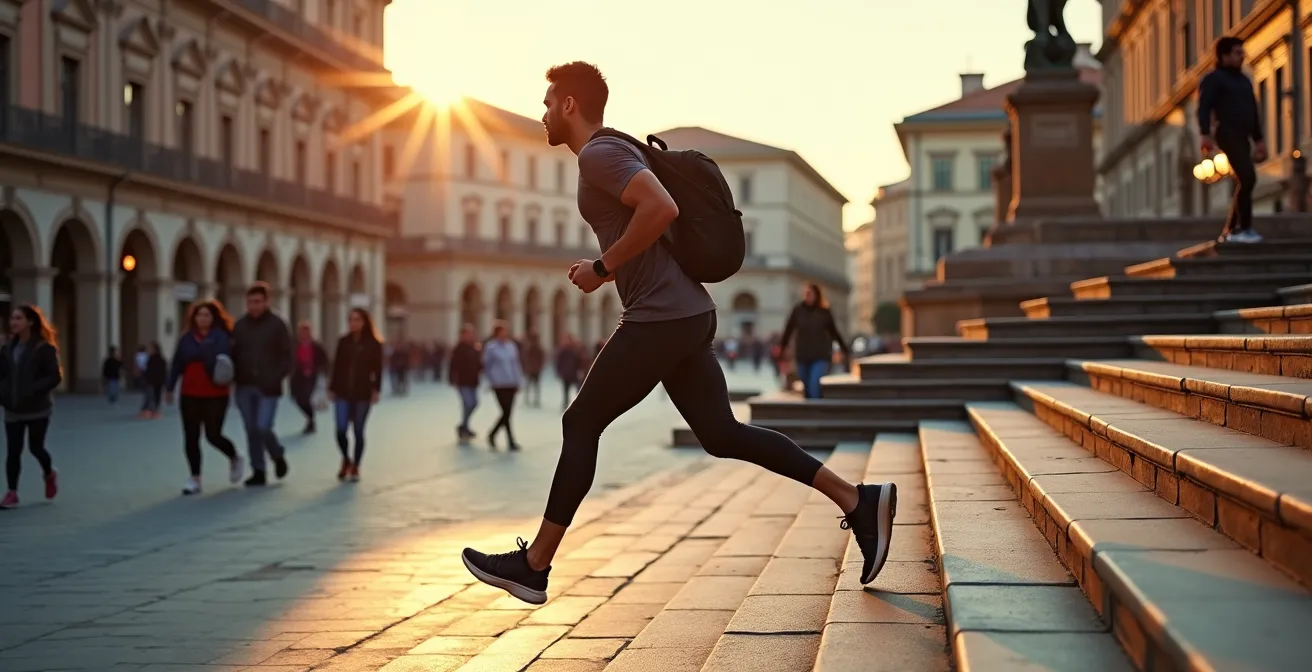
Forget the belief that staying fit on vacation means choosing between a stuffy hotel gym and losing your progress. The real secret is turning your travel environment into a dynamic, functional fitness playground. This guide reveals how to leverage simple exploration, from city walking to park benches, to create workouts that are more effective and infinitely more exciting than any treadmill routine.
The dreaded vacation fitness dilemma: you’ve worked hard to build momentum, and the thought of a week or two of delicious local food and lazy afternoons feels like a one-way ticket back to square one. The common advice is to either find a hotel with a gym—trapping you indoors when you should be exploring—or to dutifully perform bodyweight squats in your tiny room. This “all or nothing” approach often leads to guilt, frustration, and a feeling that fitness is a chore that gets in the way of travel.
But what if this entire framework is wrong? What if the key to staying in shape isn’t about *scheduling* exercise, but about *integrating* it seamlessly into the very act of discovery? The truth is, your travel destination is a far more potent and engaging gym than you realize. It’s an obstacle course, a cardio machine, and a functional training center all rolled into one, waiting for you to see its potential.
This is about shifting your perspective. Instead of viewing fitness and travel as two opposing forces, we’re going to fuse them. We’ll explore the science that makes a day of sightseeing a powerful calorie-burning activity, turn everyday urban furniture into a full-body workout station, and use spectacular natural landscapes to push your physical and mental limits. It’s time to stop fighting your vacation and start making it your best-ever training partner.
In this guide, we’ll break down the creative and effective strategies to transform your trip into a continuous, energizing workout. Let’s dive into how you can explore the world while keeping your body in peak condition.
Summary: Your Guide to Gym-Free Travel Fitness
- Why Walking a City Burns More Calories Than Your Treadmill Routine?
- How to Turn a Park Bench Into a Full-Body Workout Station?
- Cycling or Bus: Which Sightseeing Method Improves Cardiovascular Health?
- The “Weekend Warrior” Error That Ruins Knees on Vacation
- When to Exercise to Mitigate the Impact of Heavy Local Cuisine?
- How to Use Public Transit to Feel the Real Pulse of a Modern City?
- How to Find Beach Towns With Great Gyms and Trails?
- How to Use Spectacular Natural Settings to Push Your Physical Limits?
Why Walking a City Burns More Calories Than Your Treadmill Routine?
The idea that an hour on a treadmill is the gold standard for calorie burning is one of the biggest myths in fitness. The real key to a high metabolism isn’t just that single, isolated workout, but your total daily energy expenditure. A huge part of this is something called Non-Exercise Activity Thermogenesis (NEAT). This is the energy you burn doing everything *except* sleeping, eating, or formal exercise. Think walking, climbing stairs, carrying groceries, or fidgeting.
When you explore a new city on foot, you are supercharging your NEAT. Unlike the monotonous, flat surface of a treadmill, a city provides constant, unpredictable variety: cobblestone streets that challenge your stabilizer muscles, sudden flights of stairs to a scenic viewpoint, hills you didn’t see on the map, and the simple act of carrying your backpack. This isn’t just “walking”—it’s a full-day, low-intensity functional workout.
The metabolic impact is staggering. In fact, research shows that differences in NEAT can account for up to 2,000 kcal/day between individuals of similar size. A sedentary office worker and an active traveler might eat the same lunch, but their daily burn is worlds apart. That hour-long, pre-planned gym session simply can’t compete with 8-10 hours of continuous, varied movement integrated into a day of discovery.
How to Turn a Park Bench Into a Full-Body Workout Station?
Every city park, plaza, or waterfront promenade is dotted with one of the most versatile pieces of fitness equipment you could ask for: the humble park bench. Seeing it as more than just a place to sit is a game-changer for the traveling athlete. With a little creativity, a bench becomes a full-body workout station that can challenge your strength, stability, and power—no equipment needed.
The key is using the bench to manipulate leverage and elevation, allowing you to progress or regress exercises to match your fitness level. It’s a perfect tool for environmental fitness, where you adapt your movements to the world around you. This approach is not only effective but also makes your workouts feel more like play and less like a chore. You’re not in a sterile gym; you’re interacting with your environment in a powerful, physical way.

Ready to give it a try? Here’s a simple progression system you can use on any bench you find:
- Beginner Power: Start with 15 incline push-ups, placing your hands on the seat of the bench. The higher angle makes it more manageable than a standard push-up.
- Intermediate Cardio & Strength: Perform 20 step-ups, alternating legs. Focus on driving through your heel to engage your glutes.
- Advanced Strength: Flip it around for 10-15 decline push-ups with your feet elevated on the bench. This significantly increases the load on your chest and shoulders.
- Core Finisher: Sit on the edge of the bench and perform 3 sets of leg raises and seated knee tucks to target your entire midsection.
- Lower Body Burnout: The ultimate bench move—Bulgarian split squats. Place the top of one foot on the bench behind you and perform 12 squats on each leg. This is a killer for balance and single-leg strength.
Cycling or Bus: Which Sightseeing Method Improves Cardiovascular Health?
When navigating a new city, the choice between hopping on a tour bus or renting a bike seems like a simple trade-off between comfort and effort. But from a functional fitness perspective, the answer is more nuanced. While cycling is the obvious winner for a high-intensity cardio blast, a hybrid approach involving public transport and walking might be the smarter choice for sustained, all-day energy expenditure and cardiovascular benefit.
As this comparative analysis shows, each mode of transport contributes differently to your overall activity levels. Cycling provides a powerful, short-term boost, while a strategy involving the bus or metro promotes sustained, low-intensity activity that is excellent for fat oxidation and building an endurance base. According to a 2024 study on energy expenditure, the combination of walking to stops, climbing stairs in stations, and standing during the ride creates a significant cumulative effect.
| Activity | Energy Expenditure | NEAT Contribution | Additional Benefits |
|---|---|---|---|
| Cycling (moderate pace) | 6-8 kcal/min | High intensity burst | Cardiovascular endurance boost |
| Bus + Walking | 1.54 kcal/min standing + 4.73 kcal/min walking | Sustained low intensity | Better fat oxidation, includes stair climbing |
| Hybrid Approach | Variable 4-8 kcal/min | Balanced intensity | Accessibility and sustained energy |
The ultimate strategy is a hybrid one. Use a bike for dedicated scenic routes or to cover medium distances, but embrace the bus or subway for longer cross-city journeys. Get off a stop or two early to force a 15-minute walk through a new neighborhood. Always take the stairs instead of the escalator. This blend of intensities keeps your body guessing and your metabolism humming, turning simple transit into a core part of your travel fitness plan.
The “Weekend Warrior” Error That Ruins Knees on Vacation
You’ve arrived at your destination, buzzing with energy and a long list of sights to see. The temptation is to go from zero to one hundred, cramming in 20,000 steps on day one after weeks of sitting at a desk. This is the classic “Weekend Warrior” mistake, and on vacation, it’s a fast track to shin splints, aching joints, and debilitating knee pain that can derail your entire trip. Your mind is on vacation, but your tendons and ligaments aren’t.
While fitness research indicates that hitting 10,000 steps a day burns an extra 300-400 calories, a sudden spike in volume without proper preparation puts immense strain on your lower kinetic chain. The unfamiliar terrain of cobblestones, steep hills, and hard pavement acts as a force multiplier, exposing weaknesses in your ankles, hips, and, most commonly, your knees. The key isn’t to be less active, but to be smarter by preparing your body *before* you leave.
A proactive approach to joint-proofing can make all the difference, transforming you from a potential casualty into a resilient explorer. Think of it as building armor for your joints. A simple pre-travel conditioning protocol will prepare your connective tissues for the increased load, improve stability, and ensure you can handle whatever your adventures throw at you.
Your Pre-Travel Knee Protection Protocol
- Joint Conditioning: Two weeks before your trip, start a daily 15-minute walk to begin conditioning your joints for increased activity.
- Stability Training: Practice single-leg stability exercises. Stand on one foot for 30 seconds, focusing on keeping your ankle and knee steady. Repeat on each side.
- Glute Activation: Strengthen your gluteus medius, a key knee stabilizer, with 3 sets of 15 side-lying leg lifts on each side.
- Kinetic Chain Prep: Perform daily ankle circles and calf raises to prepare the entire lower leg for varied terrain and impact.
- Mobility Work: Implement a post-walk stretching routine that specifically targets your quads, IT band, and hip flexors to maintain flexibility.
When to Exercise to Mitigate the Impact of Heavy Local Cuisine?
Let’s be honest: part of the joy of travel is indulging in the local cuisine. Rich pasta in Rome, decadent pastries in Paris, hearty stews in Dublin—these are experiences to be savored, not feared. The fitness-minded traveler’s worry is how to enjoy these meals without them derailing their progress. The answer lies not in restriction, but in strategic timing. By cleverly scheduling short bursts of activity, you can prime your body to use those extra calories for fuel, not fat storage.
This technique is called metabolic priming. A short, high-intensity workout before a large meal can deplete your muscles’ glycogen (stored carbohydrate) reserves. This makes your muscles “hungry” for nutrients. As a study on exercise timing and glycogen management explains, this process increases insulin sensitivity, meaning the calories from your meal are preferentially shuttled into your muscles to replenish those stores, rather than being converted to fat. It’s like telling your body exactly where to put the energy from that delicious meal.

Here’s how to put this into practice with a few strategic options:
- Morning Fasted Exploration: Before breakfast, take a 30-minute low-intensity walk to a viewpoint. This encourages your body to use stored fat for energy.
- The 15-Minute Pre-Meal Blast: Fifteen minutes before your biggest meal of the day, find a quiet spot and do a quick bodyweight circuit: 3 rounds of 10 squats, 10 push-ups, and 5 burpees. This is enough to kickstart the glycogen depletion process.
- The Post-Meal Stroll: A gentle 15-20 minute walk after eating helps stabilize blood sugar levels and aids digestion, preventing that post-meal slump.
- Evening Hotel HIIT: If you know you’re heading out for a big dinner, a 10-minute high-intensity interval session in your room (think jumping jacks, high knees, and mountain climbers) can be incredibly effective.
How to Use Public Transit to Feel the Real Pulse of a Modern City?
For many travelers, public transportation is just a means to an end—a way to get from Point A to Point B. But for the functional fitness enthusiast, it’s a goldmine of incidental activity and a direct line to the authentic rhythm of a city. Choosing the metro over a taxi isn’t just a budget-friendly move; it’s a conscious decision to weave more movement into your day and experience your destination like a local.
The fitness benefits are surprisingly significant. The journey involves more than just sitting down. You walk to and from stations, navigate complex interchanges, and climb multiple flights of stairs. You might even spend your ride standing, which, while seemingly minor, adds up. A 2024 study on public transportation and NEAT found that standing during transit burns 1.54 kcal/min versus just 1.47 kcal/min sitting. It may seem small, but compounded over several rides a day for a week, it contributes meaningfully to your overall energy expenditure.
As experts from the Korean Society for Exercise Nutrition note, this approach transforms a passive commute into an active one:
PT gives individuals opportunities for increased NEAT through incidental PA associated with commuting… walking to and from transit stops, navigating stations, or standing during transit rides.
– Korean Society for Exercise Nutrition, Effects of public transportation use on NEAT and health promotion
Beyond the physical, this method offers deep cultural immersion. You’re not insulated in a tourist bubble. You’re sharing space with locals, observing daily routines, and discovering neighborhoods you’d otherwise miss. This dual benefit of physical activity and authentic experience is the essence of smart travel fitness.
How to Find Beach Towns With Great Gyms and Trails?
A beach vacation doesn’t have to mean a fitness hiatus. In fact, coastal environments offer some of the most dynamic and challenging natural training grounds available. The key is to look beyond just the sand and sea and scout for towns that have a built-in infrastructure for an active lifestyle. This means shifting your search from “beach towns with gyms” to “beach towns with trails, promenades, and outdoor fitness opportunities.”
The coastal environment itself is a powerful piece of equipment. Soft sand running, for instance, provides instability that strengthens your ankles and feet. It also acts as natural resistance, and research suggests sand training can increase your caloric burn by up to 60% compared to running on a hard surface. A sunrise run on the beach isn’t just a workout; it’s an exploration of coastal backstreets and scenic viewpoints, combining cardio with discovery.
To find your perfect active beach destination, you need to become a digital scout before you even pack. Use a combination of apps and online tools to vet locations for their fitness potential:
- Trail Hunting: Use an app like AllTrails and search with keywords like ‘coastal path’, ‘esplanade’, or ‘promenade’ to find established running and walking routes with ocean views.
- Map Reconnaissance: Scan your potential destination on Google Maps. Look for long green strips along the coast, which often indicate parks or public running routes. Use Street View to spot outdoor gym equipment or “calisthenics parks.”
- Activity Hubs: Look for evidence of an active local culture, such as beach volleyball courts, water sports rental facilities (kayaking, paddleboarding), and designated swimming areas.
- Community Vibe: Check local Facebook groups or community pages for activities like dawn yoga classes on the beach or local running clubs that welcome visitors.
- Tidal Awareness: Before you go, scout the tide schedules. The best running is often on the firm, packed sand at low tide.
Key Takeaways
- Rethink “exercise” on vacation; focus on increasing your Non-Exercise Activity Thermogenesis (NEAT) through constant, varied movement.
- Turn your environment into your gym. A park bench, a set of stairs, or public transit can all be powerful fitness tools.
- Be strategic with your timing. Use short, intense workouts before big meals to prime your metabolism and a gentle walk after to stabilize blood sugar.
How to Use Spectacular Natural Settings to Push Your Physical Limits?
Ultimately, the most powerful motivator for staying fit while traveling isn’t about metrics or routines; it’s about purpose. Why do you train? So you can say “yes” to adventure. So you can climb that mountain for the breathtaking view, hike to that hidden waterfall, or have the energy to explore a city from dawn until dusk. Spectacular natural settings are the ultimate arena to test your fitness and remind you *why* you put in the work.

This is where fitness transcends the physical and becomes experiential. Instead of counting reps, you’re chasing a landmark. The environment itself becomes your coach and your competition. This approach, which we can call Environmental Finish Line Training, uses natural features to create organic goals and intensity variations. It’s a way to gamify your workout and connect deeply with your surroundings.
Embrace this mindset with these creative methods:
- Landmark Sprints: See a distant waterfall, a unique rock formation, or a bend in the trail? Sprint to it. Recover. Pick your next landmark.
- Summit Rewards: When you reach a scenic summit or viewpoint, don’t just take a picture. Drop and perform 20 bodyweight squats or hold a plank while you take in the view. Earn the rest.
- Natural Incline Training: Use steep trails as your personal “incline setting.” Power hike up them to spike your heart rate and build leg strength, then take a controlled, stable descent.
- Terrain Agility: Choose your path strategically. A sandy trail will build resistance, while a rocky or root-filled path will challenge your agility, stability, and focus.
This philosophy is perfectly captured by travel expert Steve Kamb, who found that travel itself was the ultimate fitness motivation:
I used to be a gym rat trying to get fit, and it wasn’t until I started traveling that I really had to dig into the motivation behind WHY we should take care of ourselves: So we can do cool activities that remind us why being alive is amazing!
– Steve Kamb, The Foolproof Guide to Staying in Shape While Traveling
By adopting this mindset, you’re no longer just a tourist; you’re an adventurer, an athlete, and an explorer, using your fitness to unlock a deeper, more exhilarating travel experience. Start seeing the world as your gym, and you’ll return from your travels stronger, more energized, and with more incredible stories to tell.